Beauty
Hustle
Psycho
Graffiti
Some of the most iconic stories of our time have the word “American” in the title. Franca Miraglia’s American Devotion, directed by Mario D’Alimonte, swings for the same heights, but unfortunately doesn’t hit a home run. Featuring some of the most recognizable figures of the 1950’s, American Devotion shows the private side of these legends, though doesn’t delve much deeper. Full of great ideas, just lacking in execution, American Devotion’s world premiere felt a bit more like a workshop presentation than a fully fleshed out piece.
Miraglia’s play takes place on a fictional evening, where Normal Mailer, a misogynist novelist/journalist has come over to the house of newly married Arthur Miller and Marilyn Monroe. What’s initially supposed to be a couple of drinks between neighbouring couples, the evening ends up being a battle of wills between all three people involved. Monroe stays up in her room, terrified of Mailer and what he might see if he sees Marilyn up close. Meanwhile Mailer and Miller are getting progressively more drunk in the living room and talking about everything from politics to writing and even about Mailer’s several failed marriages. But when Miller’s upcoming hearing under the McCarthy administration becomes the topic of conversation, the whole night takes a turn for the worse.
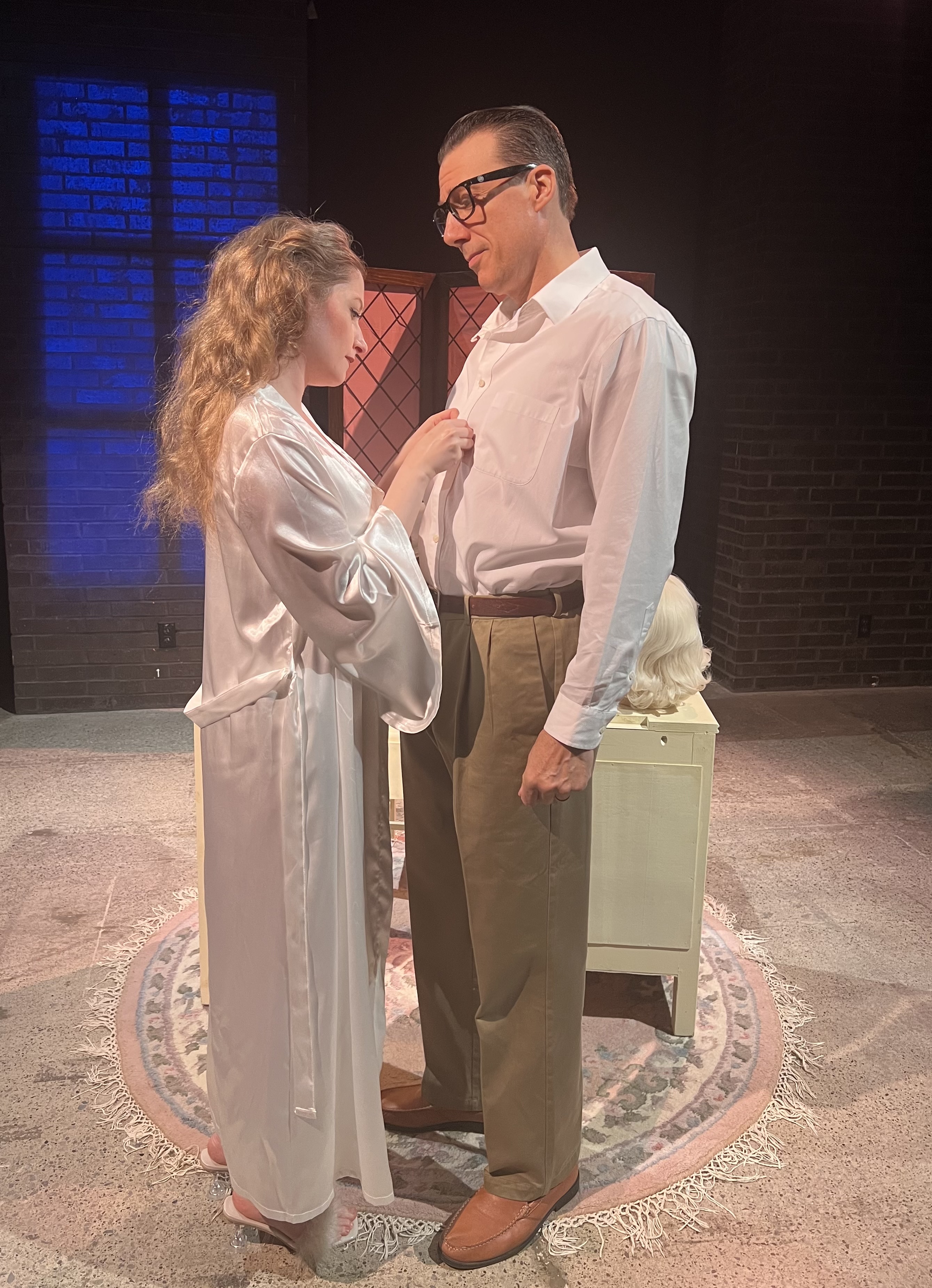
Photo by Doug Raaflaub
While American Devotion has good bones, the ideas clearly haven’t been distilled to their core arguments. The constant back and forth of Miller as he goes up and down the stairs to try to coax Monroe down immediately halts whatever progress is being made in the living room conversation. If these moments between Monroe and Miller furthered the plot it wouldn’t be as jarring, however it’s essentially the same conversation repeated over and over again (which also includes the look to and look away moment Miller does as he goes down the stairs after every interruption). Likewise, while the main conversation between the two men is certainly more interesting, it was also rather repetitive, with the same topics being brought up consistently throughout the text. I don’t know if this is to blame for the amount of stumbled lines I witnessed on opening night, or if those were just the good old opening night jitters, but it was easy to imagine getting lost in a text which has so many lines reused throughout.
I was surprised to read that the writer of this play is a woman: Monroe’s character is the least developed out of the bunch which I see as a total disservice to such a misunderstood figure in pop culture. Though at this point in her life (and with the amount of pills we see her take on stage) Monroe was certainly not the sweet starlet we all know from the movies, her paranoia starts at 100 at the top of the show, leaving the talented actress portraying her nowhere to go emotionally throughout the play. While I did enjoy the difference Monroe establishes between her public and private self represented by the blonde wig on her vanity, I feel like the private self we witness is entirely one note.
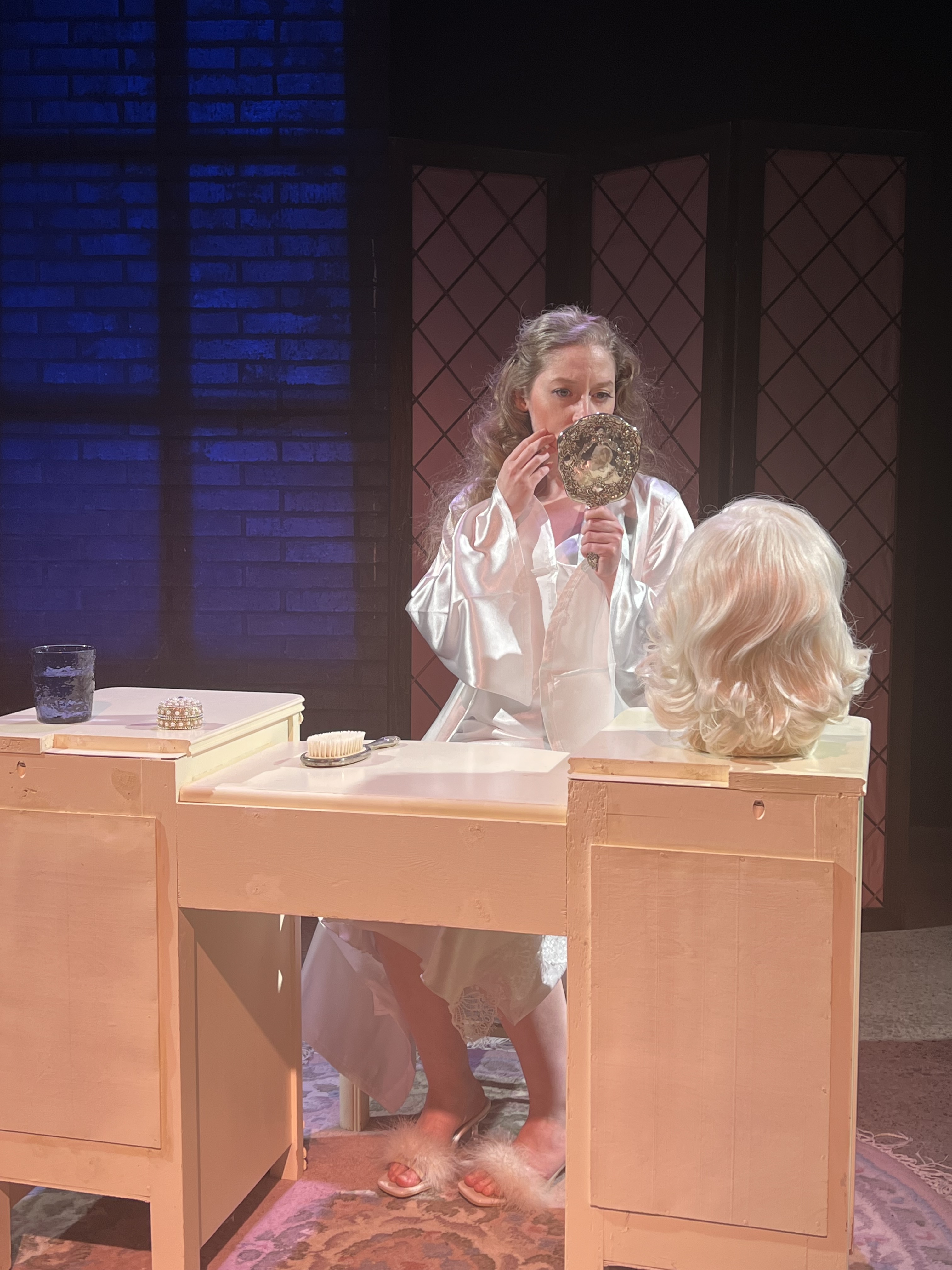
Photo by Doug Raaflaub
Petra Brockus’ set is full of delightfully vintage furniture, allowing us to immediately know which era we’re about to be immersed in. Denise Daly’s costumes likewise embodied the characters well and riffed on some of Monroe’s iconic outfits. While they made good use of the length of the Studio Theatre at Crow’s, one thing which bothered me immensely was the lack of adherence to the rules of the established spaces. The living room occupies one end of the stage and Monroe’s room the other, which is clearly shown by Brockus’ set. The need to go up the stairs in the liminal area between is shown through a large stair-post and the movement of the actors. However, there were times where Mailer was saying something horrendous and Monroe would react to him from her room. While I understand that the argument could be made that her door is open so she can hear their rather loud voices from upstairs, she was looking right at him as she reacted, totally breaking the illusion of her being in her own space. Likewise, during the final scene between Monroe and Miller, Monroe moves into the living room area a few times, breaking the rules pre-established by their characters. While this does give the opportunity for the audience members at that end of the room to see her, it’s done in such a way that feels incongruous to the rest of the upstairs scenes.
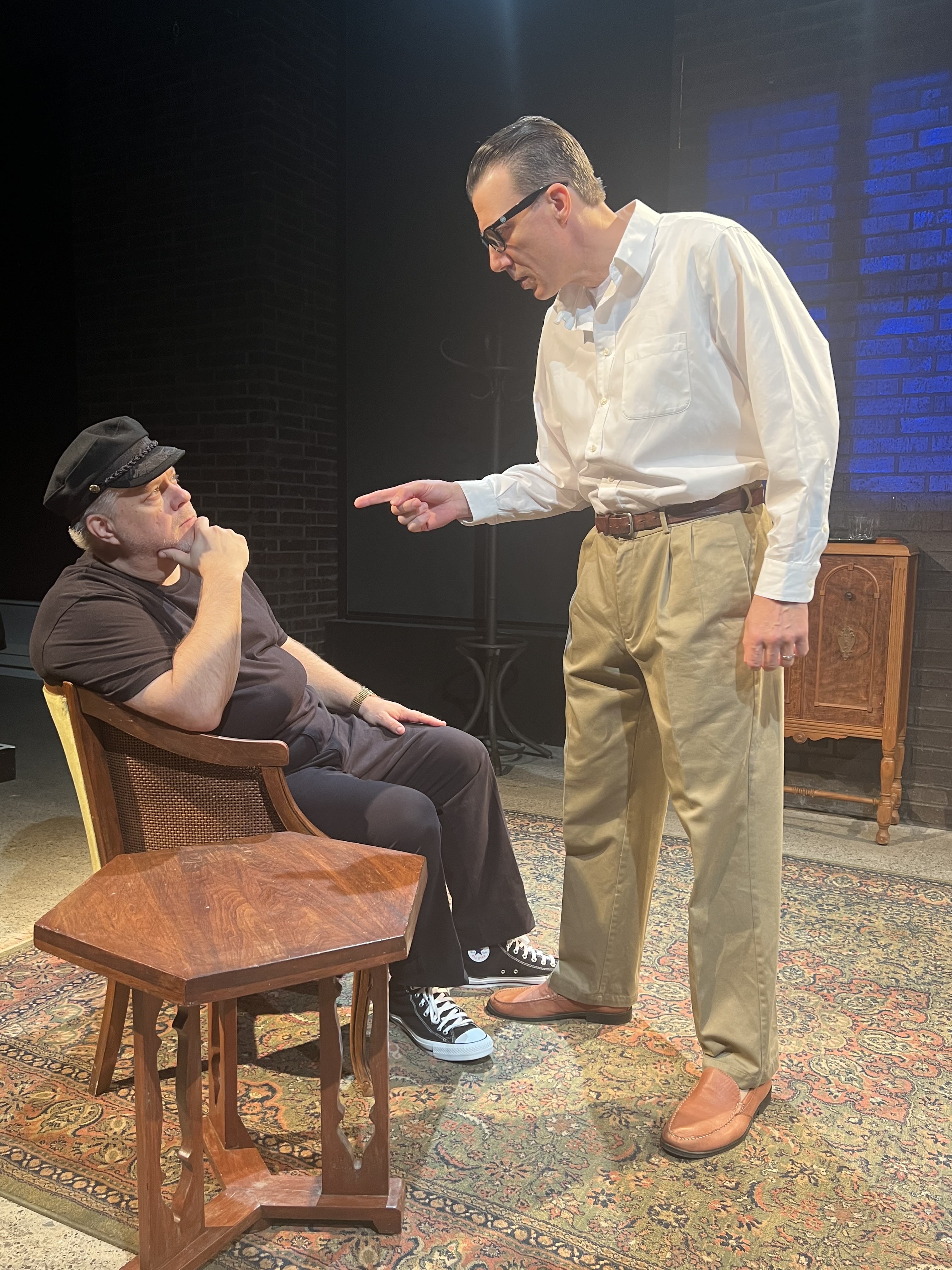
Photo by Doug Raaflaub
An element of the text I enjoy is Miller and Mailer talking about Waiting for Godot. It’s especially amusing considering American Devotion essentially ends up in a similar fashion: two men, waiting for someone who’s never going to come. Had they made some reference to Godot at the end, like having Mailer say “Same time next week?” or something to that effect, it would have perfectly closed the circle, but alas, that is not to be. However, the rise of absurdist theatre would have totally rocked Miller’s world, despite the fact that he was essentially speaking to the same issues just from a more conventional perspective. Listening to the two men “talk shop” in this way is intriguing, and gives what’s otherwise a very dense and dreary text some moments of theatre-based levity.
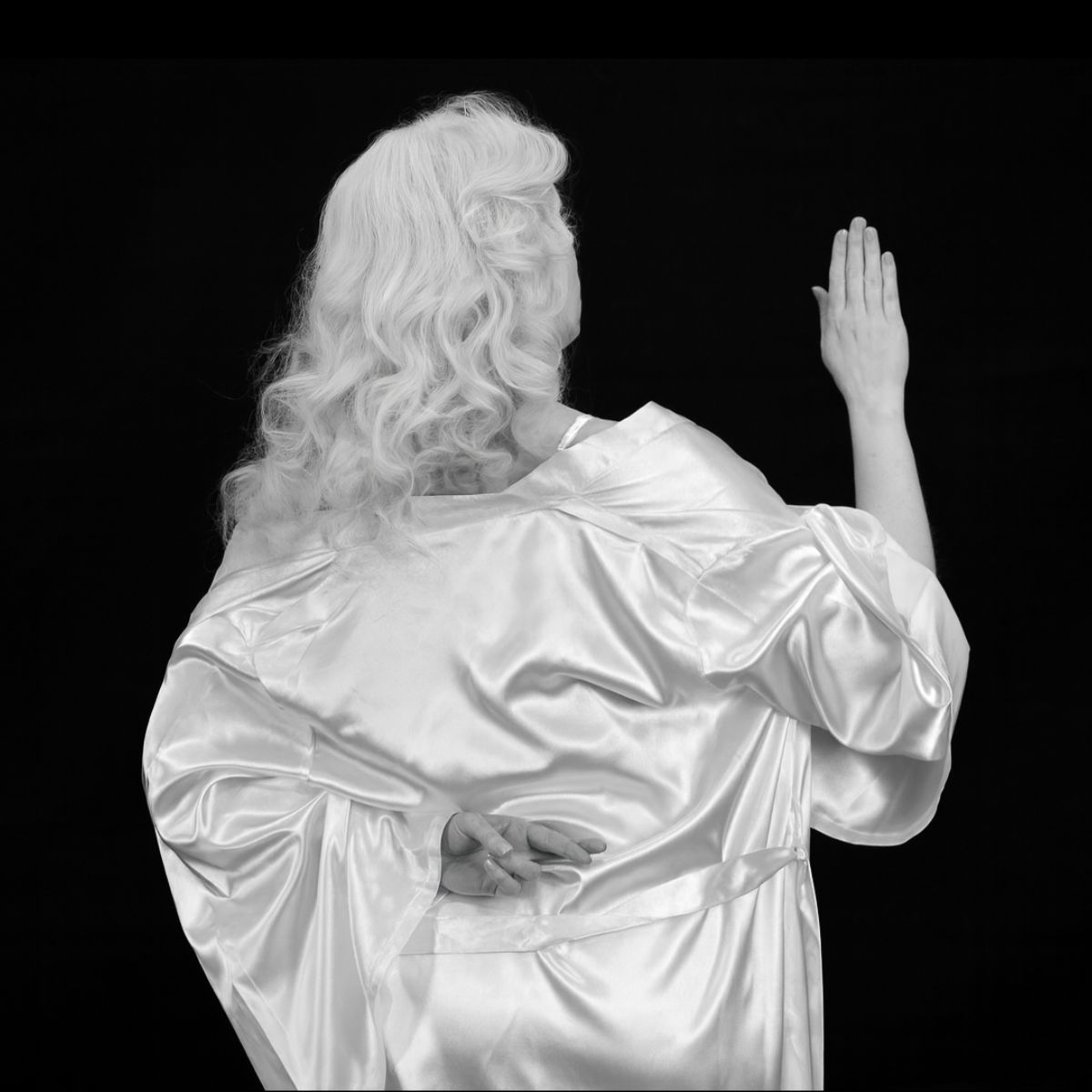
For all its faults, the performances in American Devotion are impressive. Misha Harding’s Marilyn Monroe is heartbreaking; watching her shake in fear made my heart reach out to her. Holm Bradwell’s Arthur Miller makes me hope that the real Miller wasn’t such a pushover, yet the moments where Miller gets passionate, Bradwell really gets to shine. Though we’re always asked to suspend our disbelief when entering a theatre, even I find it difficult to believe that Mark Rittinger’s Norman Mailer was only 40. However, Rittinger gives a fierce performance, making the audience both loathe and pity Mailer. These performers were clearly doing their best with what they were given, and to portray such well-known figures must be daunting, yet they did so with grace.
I think American Devotion could really become something great. It needs editing and some deepening of the characters, but the idea itself is really good. We’re in another era where the American government seems to be losing all sense of sanity and what it means to be human, so the story of McCarthyism is certainly an understandable one. And to look at the life of the man who wrote The Crucible rather than remounting it is a fascinating premise. I truly hope American Devotion can get the time and polish it needs to become a thing of beauty like Marilyn herself.
American Devotion runs in the Studio Theatre at Streetcar Crowsnest until June 21. For more information and tickets visit: https://www.crowstheatre.com/shows-events/american-devotion
Cover Photo: Holm Bradwell (Arthur Miller) and Mark Rittinger (Norman Mailer). Photo by Julie Adams.
Thank you to my Patrons:
Natalia, Steve, Brendan, Deborah, and Phil
And to my supporters who’ve bought me a coffee:
Angelica and Paul, Anonymous, Adrianna, Caitlin, Jonathan, Jada, and Courtney
Would you like to become a Patron? Check out my Patreon at: https://www.patreon.com/AViewfromtheBox
Or, you can buy me a coffee at: buymeacoffee.com/aviewfromthebox

