“Af dem hob ikh eyn entfer — Got is a foter un
Heylik is zayn Toyre!”
From the opening lines of Fiddler on the Roof in Yiddish I felt the shift: changes both large and small which were taking a story I’ve known for most of my life and giving it new and deeper meaning. Directed by the inimitable Broadway legend Joel Grey, Fiddler on the Roof in Yiddish feels grounded in a way which is unmatched by any of its predecessors. Starring another Broadway icon Steven Skybell and featuring a stunning Canadian ensemble, Fiddler on the Roof in Yiddish proves why this show has been a favourite for decades.
תורה
The Yiddish word for “Torah” looms large over the simple staging in the Elgin Theatre. Behind it sits the beating heart of Fiddler on the Roof in Yiddish: the orchestra. Lead by Mark Camilleri, the music envelopes the audience in its familiar score. Beowulf Boritt’s set design features pillars of fabric, distressed to look as weary as the town of Anatevka feels, flanking the sides of the stage. These are used for the projections of the English and Russian subtitles, ensuring they’re easily visible for the whole audience while not distracting from the action on stage. I found that after the first few songs, as I was getting more of a handle on the language, I was looking at the subtitles less and less. There’s something blissful about letting the show wash over you, in its own beautiful tongues, and realizing how much of an impact it still has.
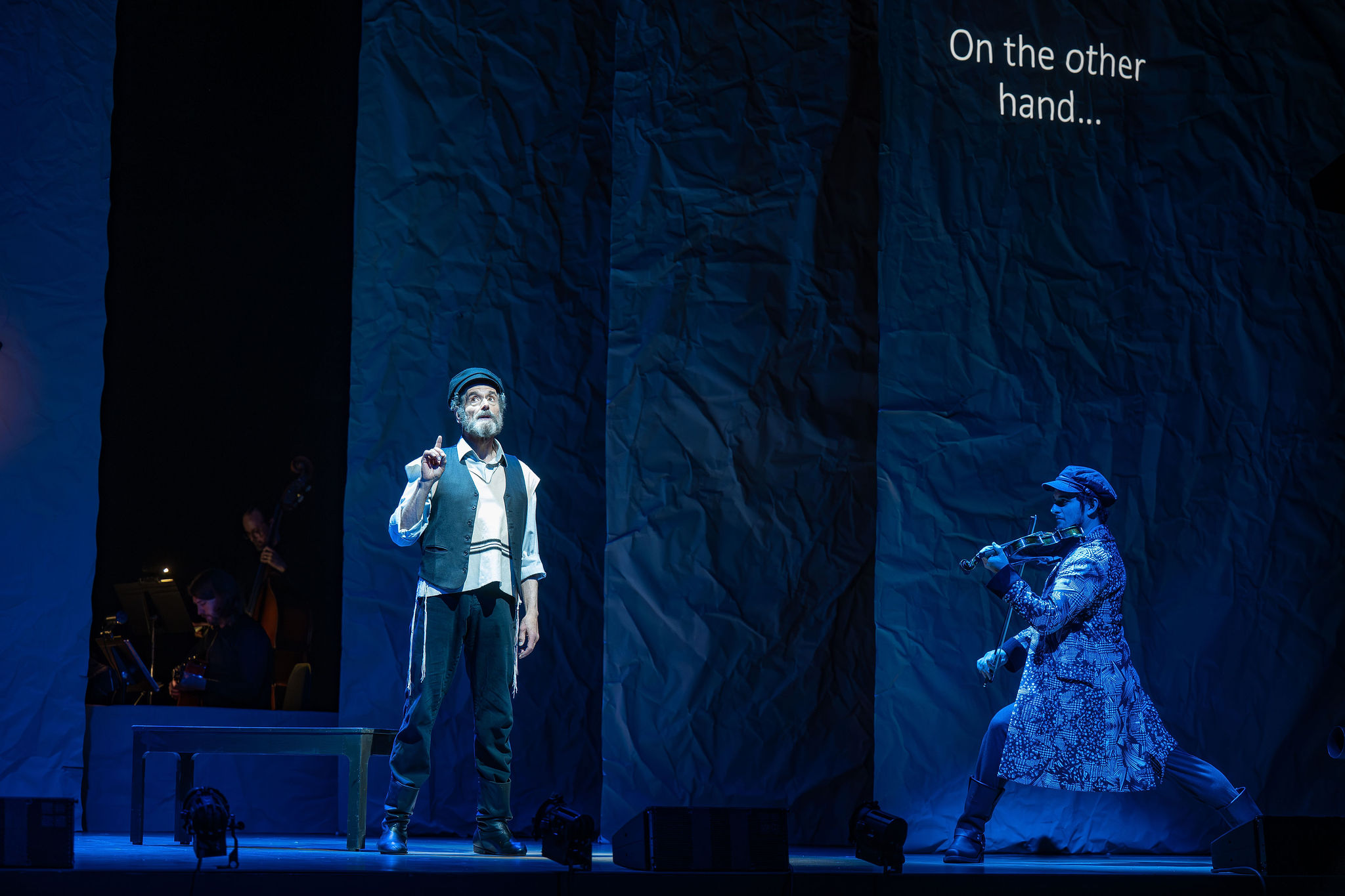
Photo by Dahlia Katz
Ann Hould-Ward’s costumes feel lived in and expertly embody the state of the characters. I particularly enjoyed the colour pairings for Tevye’s three eldest daughters and the men they marry. Peter Kaczorowski and Ethan Steimel’s lighting design is integral to telling this story, as it allows for Tevye’s asides to be clearly distinguished, while also creating awe-inspiring moments, particularly in “Der Kholem (The Dream)”.
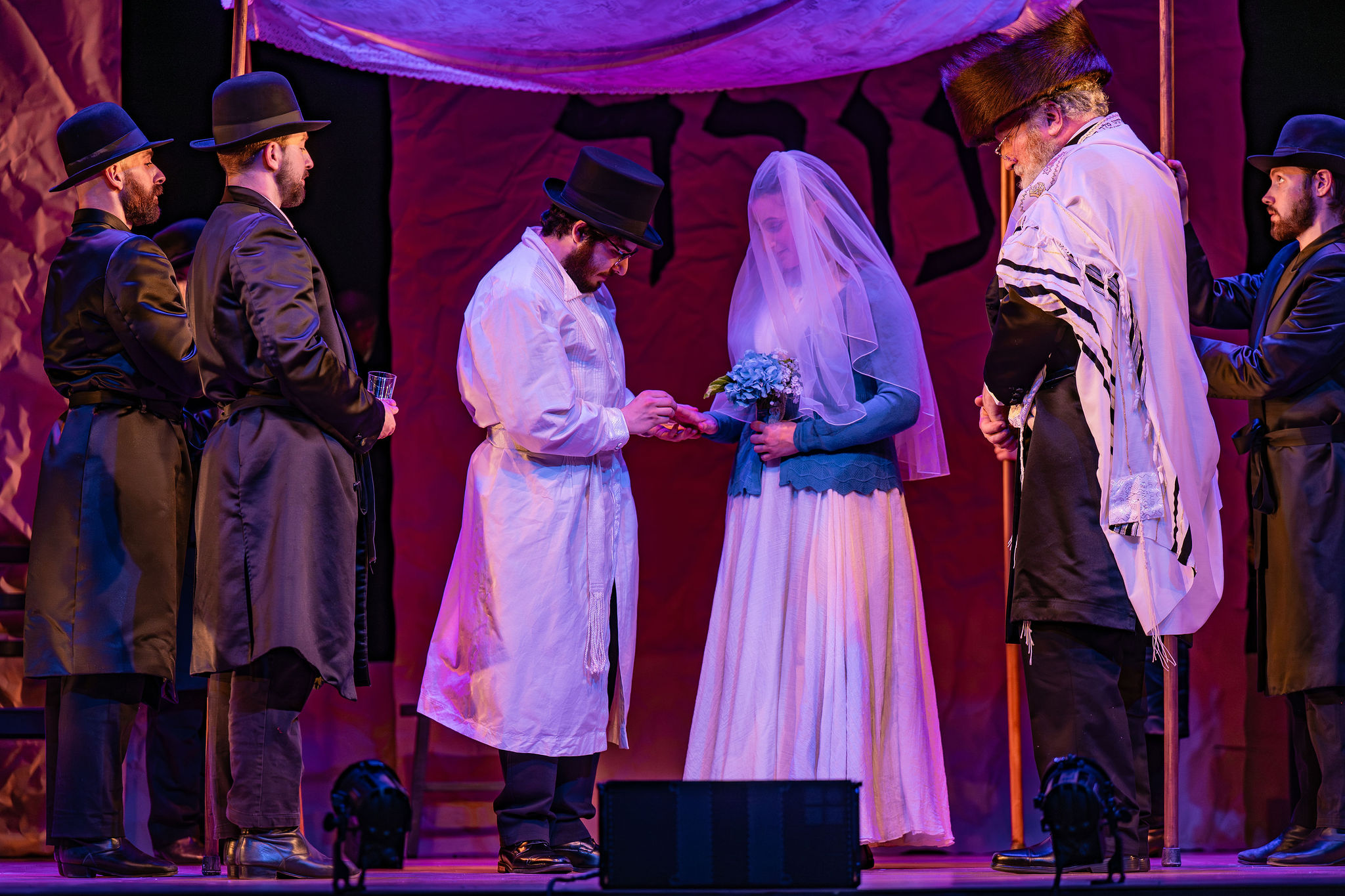
Photo by Dahlia Katz
Fiddler on the Roof in Yiddish tells the story of Tevye, a poor milkman who lives in Anatevka, a small village under Tsarist Russian rule, with his wife Golde and his five daughters. Their three eldest daughters, Tsaytl, Hodl, and Khave are all of age to be married, and the village matchmaker, Yente, is more than happy to try to make all three of them the perfect match. But when Tevye’s daughters begin to fall in love and want to choose their own matches, everything Tevye’s ever known gets thrown into question. What will happen if the traditions they hold so dear are no longer upheld?
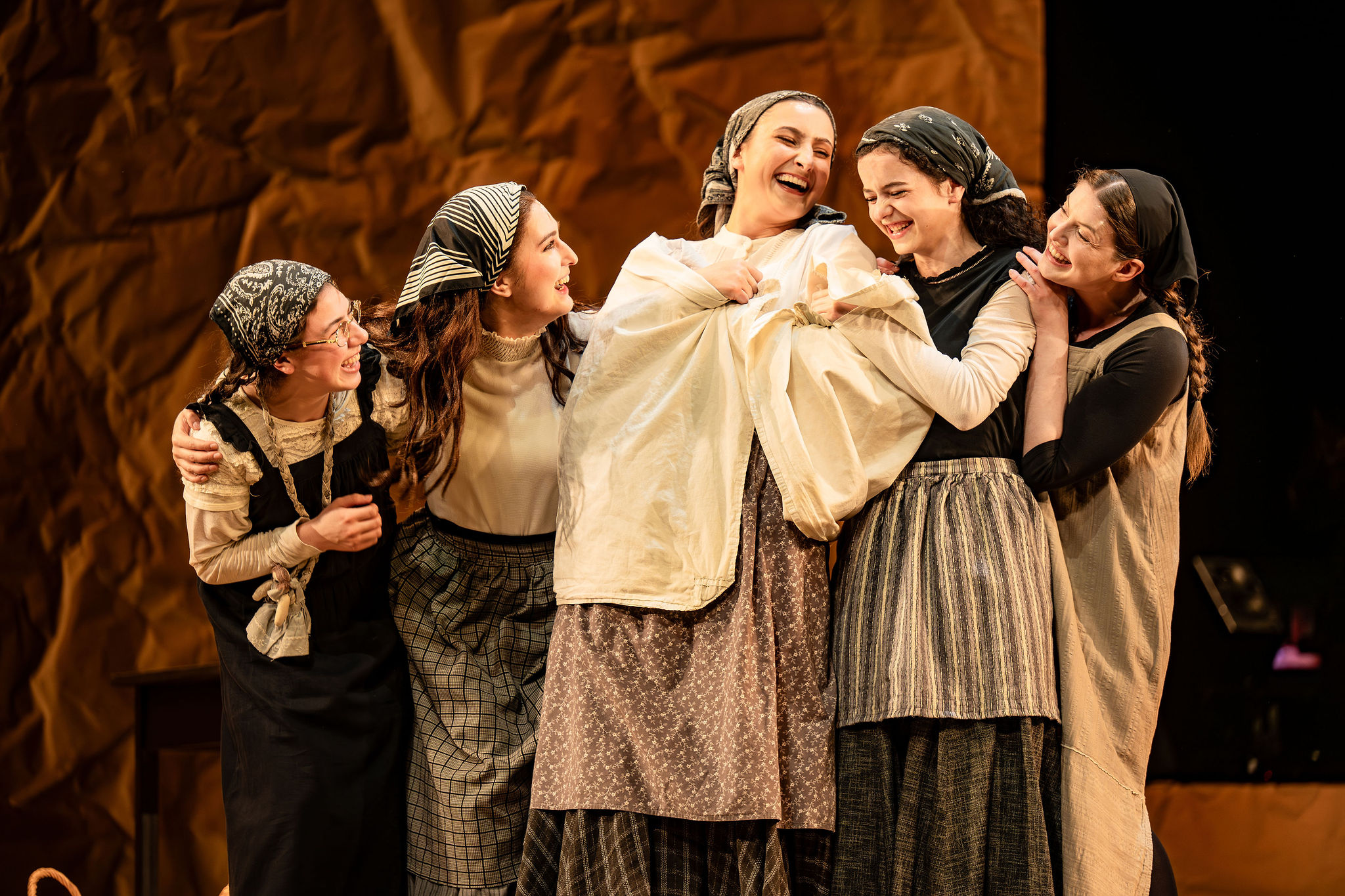
Photo by Dahlia Katz
“Fiddler on the Roof” is one of those movies where I can’t recall the first time I watched it, because it’s been such a staple of my growing up; it’s one of my Mama’s favourite films, and the songs have permeated my consciousness for as long as I can remember. But to hear this familiar story spoken in the languages these people would have actually been speaking is undeniably moving. It’s actually rather difficult to describe, but to hear this text in Yiddish, and with the subtle changes to the wording made by Shraga Friedman for the original Yiddish production in 1965, it feels alive and true in a whole new way.
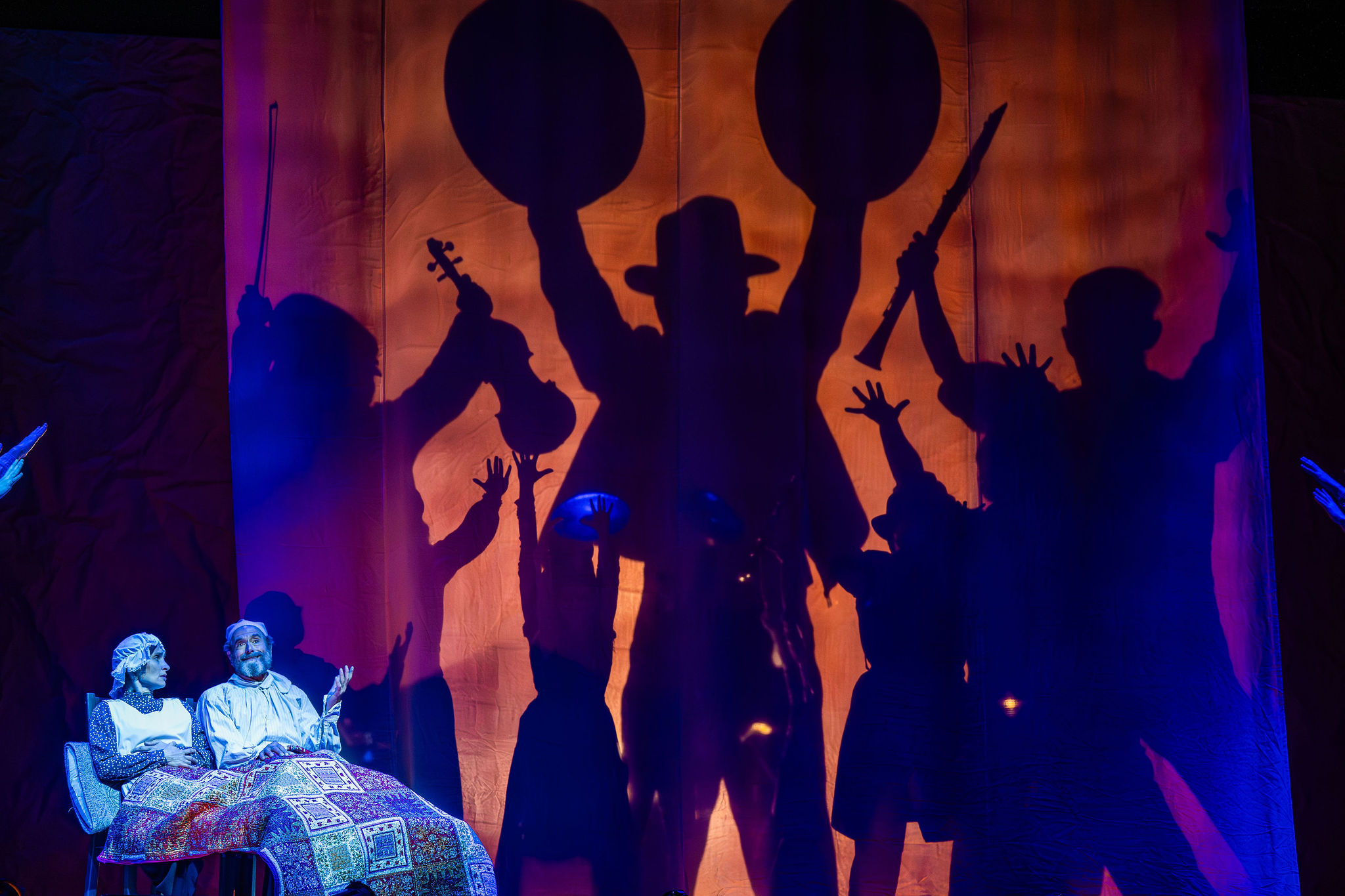
Photo by Dahlia Katz
Steven Skybell leads the cast as Tevye; his booming voice and comedic timing make him both loveable and fearsome, as Tevye should be. Tracy Michailidis’s Golde is perfectly feisty, making the sweet moments between her and Tevye all the more heartwarming. Their children are portrayed by Isidora Keckman (Tsaytl), Emma Burke-Kleinman (Hodl), Alice Malakhov (Khave), Romi Shraiter (Shprintse), and Lily Schnoor (Beylke). All of them give passionate and heartfelt performances, and I loved seeing “Shadkhnte, Shadkhnte (Matchmaker, Matchmaker)” shared between all of the sisters. Joshua Kilimnik’s Motl is awkward and adorable in the best possible way. Sayer Roberts plays the headstrong Pertshik with great conviction. Connor J. Lucas’ Fiddler floats through the piece gracefully, expertly playing the iconic music we love. Other stand-outs amongst this stellar cast are Theresa Tova as Yente, and Gabby Epstein as Frume-Sore. The pure athleticism of the dancers is mind-blowing, performing Jerome Robbins’ memorable choreography with skilled precision. It takes a village to make a play, and the cast who currently inhabits Anatevka is impressive in every way.
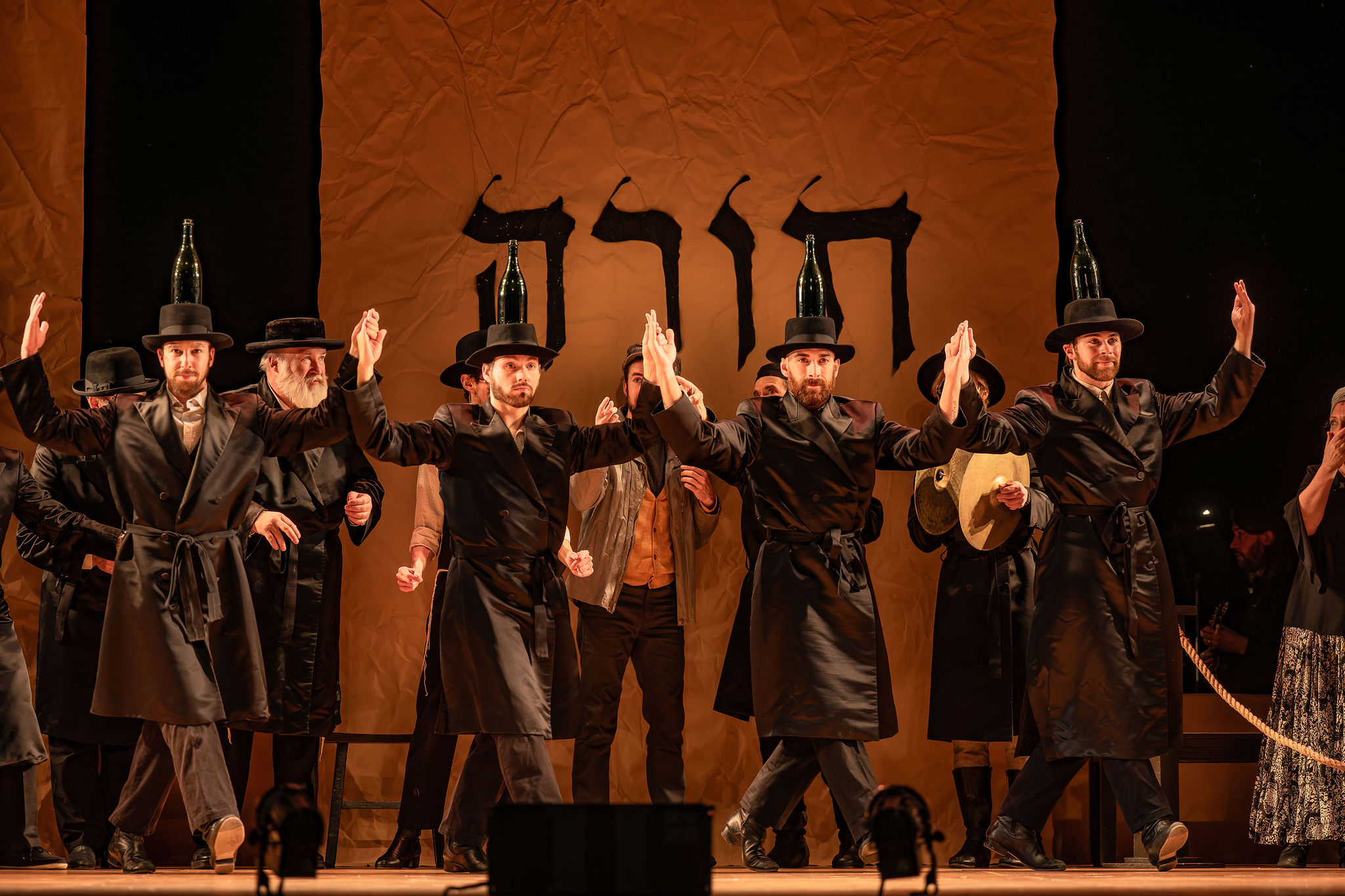
Photo by Dahlia Katz
“Some things do not change for us. Some things will never change.”
As the edict from St. Petersburg gets delivered to Tevye and the rest of Anatevka, I could hear sighs and sniffles throughout the room. This scene of forced migration is one not wholly unfamiliar to its audience; if they haven’t experienced it themselves, then their ancestors did. I used to have a very rosy outlook on this ending: I thought that these were the fore-bearers of the people who wrote this play, and this was a tribute to their tenacity. And on one hand, it is. On the other hand, there are no guarantees that everyone lived happily ever after outside of their beloved Anatevka. Yet to perform Fiddler on the Roof in Yiddish is an act of tenacity in and of itself; an example of the power of storytelling in the language it would have been spoken, performed by the people this work belongs to. You feel this gravitas radiating throughout the production, and it’s an experience you’ll never forget.
Fiddler on the Roof in Yiddish runs at the Elgin Theatre until June 7. For more information and tickets, visit: https://hgjewishtheatre.com/2025-2026-Fiddler-on-the-Roof.html
Cover Photo: Steven Skybell. Photo by Dahlia Katz.
Lyrics for “Traditsye” found here: https://genius.com/Cast-of-fiddler-on-the-roof-yiddish-2018-traditsye-lyrics
Thank you to my Patrons:
Natalia, Steve, Brendan, Deborah, and Phil
And to my supporters who’ve bought me a coffee:
Angelica and Paul, Anonymous, Adrianna, Caitlin, Jonathan, Jada, and Courtney
Would you like to become a Patron? Check out my Patreon at: https://www.patreon.com/AViewfromtheBox
Or, you can buy me a coffee at: buymeacoffee.com/aviewfromthebox

