When was the last time you really let your rage motivate you? When you used that anger you’ve been bottling up to change your life for the better? Maybe a rage session at “The Gorgon’s Cave” will help you harness that pent up energy into something more…constructive. Erin Shield’s Medusa, directed by Mitchell Cushman, is an immersive experience which allows the audience into the serpent-filled mind of the sorceress herself. Though act one’s technical aspects and riveting story had me excited for what was to come, act two didn’t pack the same poignant punches.
A disembodied hiss echoes in your ears, sending shivers down your spine as Medusa’s story begins to unfold. Shield’s play draws on the Greek mythology, bringing Medusa, her sisters, the Gods, and their heroes to life. Medusa begins working for the Goddess Athena at her temple in Athens, supposedly the pinnacle of invention and innovation. Poseidon frequently stops by, bewildered by Medusa’s devotion to Athena and steadfast work ethic. But when Poseidon tempts Medusa into trying on Aegis (Athena’s armour), then takes advantage of her right there in the temple, Medusa’s whole life changes in an instant. But what can she do? Can she use this formidable power she’s kept at bay inside her all of this time?
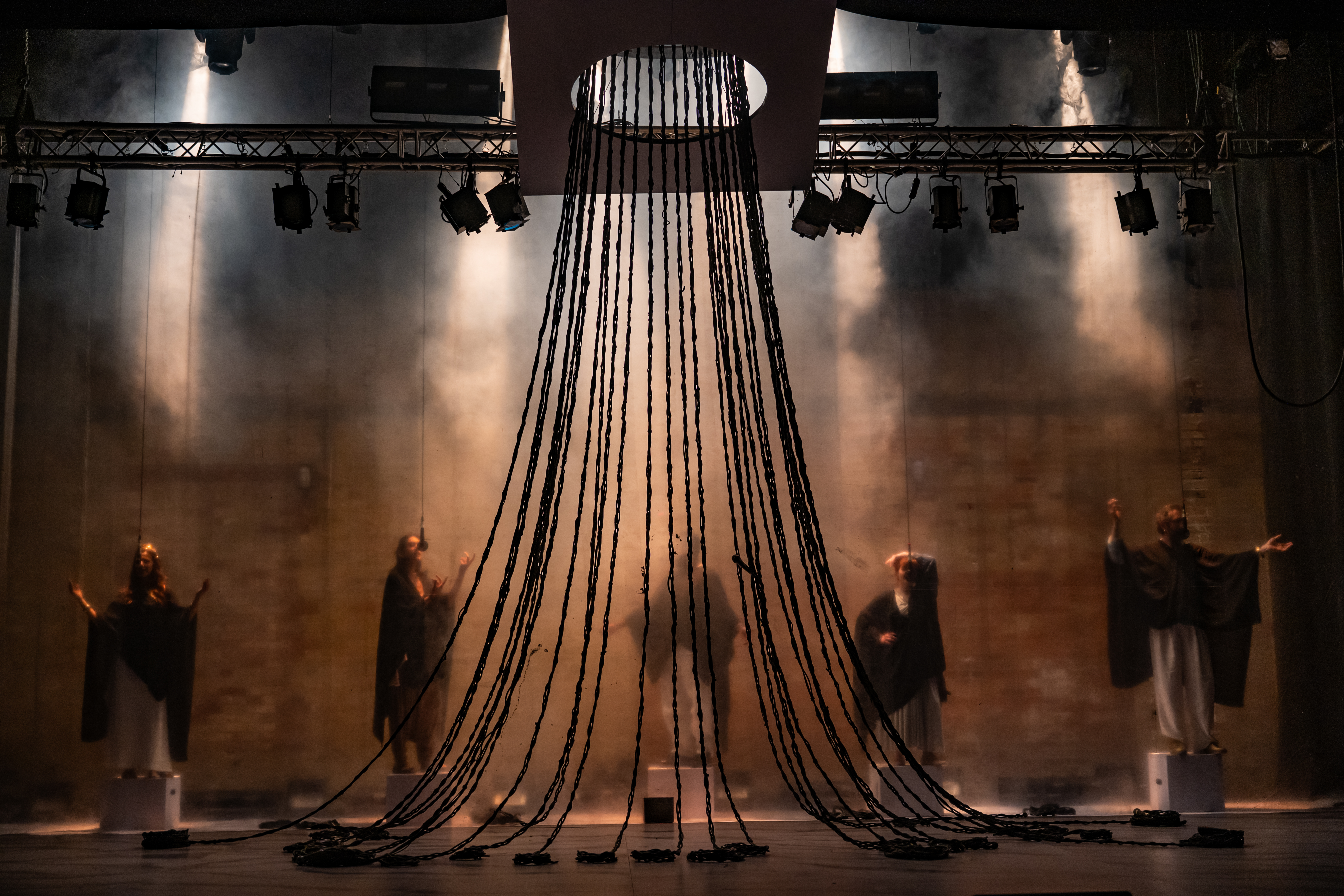
Photo by Dahlia Katz
For this production, Outside the March has developed an impressive system to allow the entire audience to be surrounded by Medusa and her serpentine thoughts. Throughout the first act, the audience dons headphones which sit above the ears so that we may hear what’s being spoken on stage as well as through the microphones which then come through the earphones. This allows for moments where we can viscerally feel the overwhelm and anxiety in Medusa’s head, while also providing comedic commentary in the more calm moments of the play.
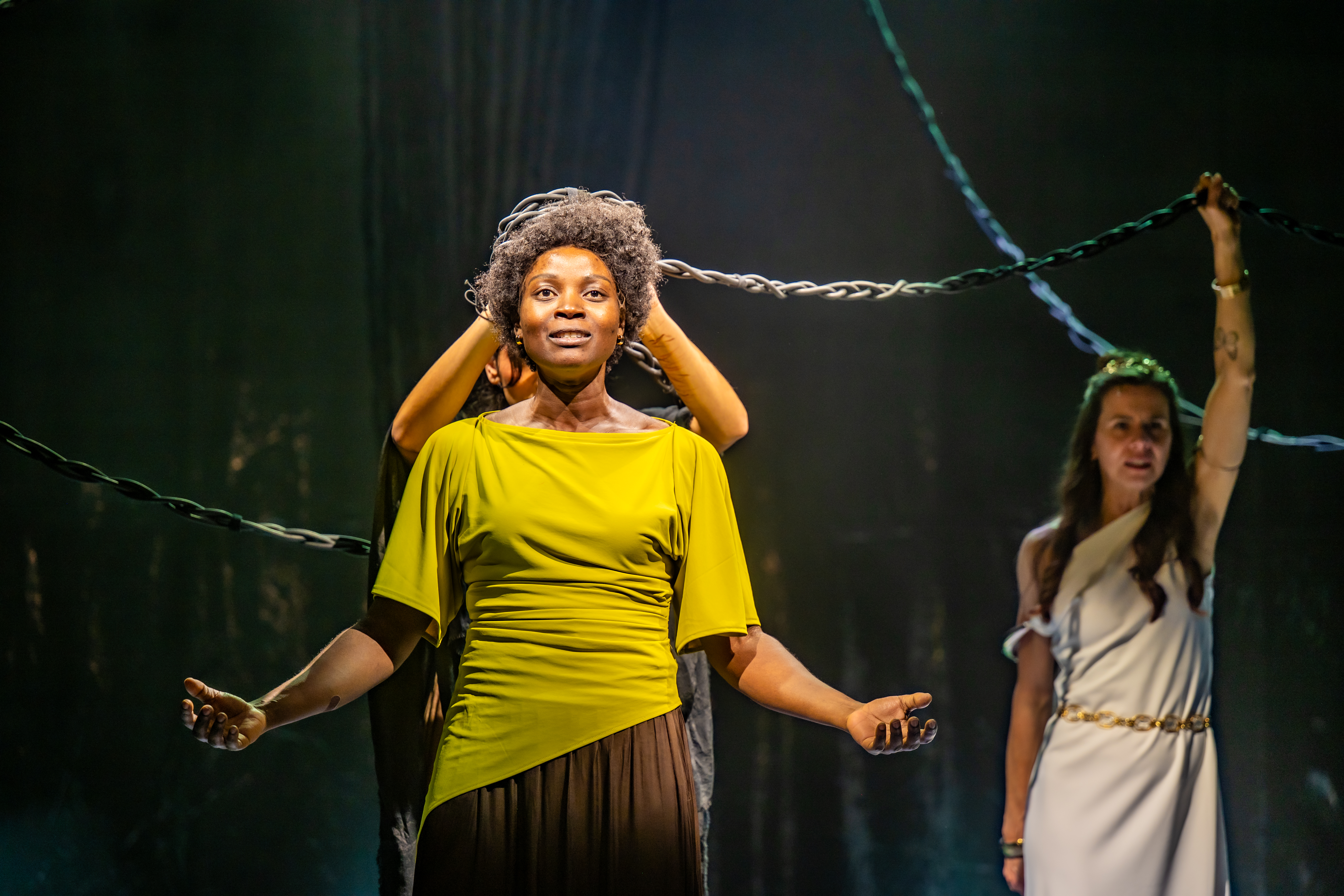
Photo by Dahlia Katz
Oyin Oladejo is a stunning Medusa. To see her respond to both what’s happening in front of her and what we’re hearing in Medusa’s mind is truly an extraordinary sight. Michelle Monteith shines as Athena, bringing poise and grace to the fearsome Goddess. Though her monologue as Daphne in the second act nearly brought me to tears. Amy Keating’s comedic timing and physicality make her a joy to watch whenever she’s on stage. Sasha Khan gives a moving performance as Euryale, Medusa’s sister. Danté Prince is charming and sweet as Percy, but also boisterous and funny as Jason. Gord Rand’s characters all share the same charisma which borderlines on cockiness, making them perfect foils for the female characters they encounter.
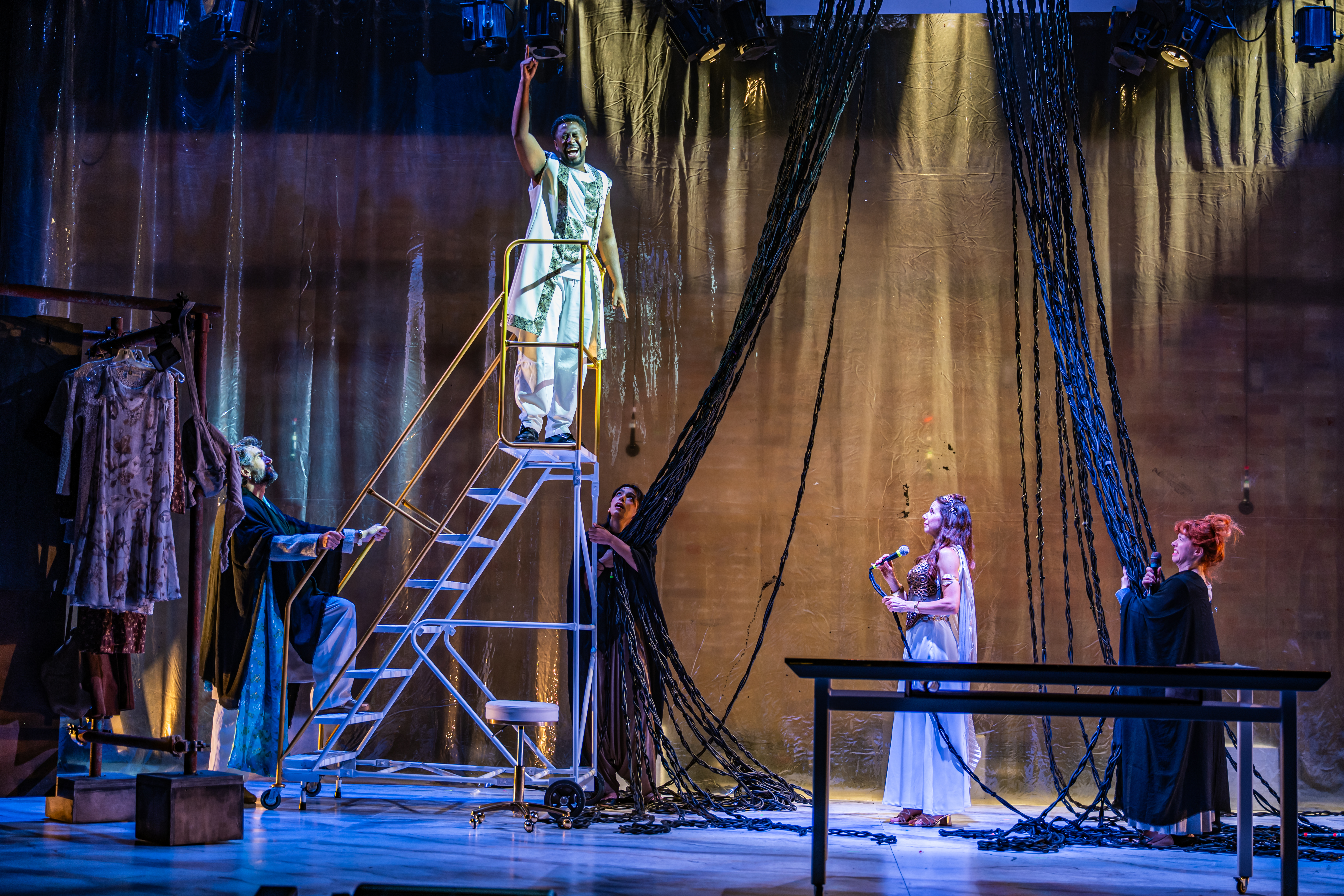
Photo by Dahlia Katz
In the original Greek myths, Medusa is cursed to have snakes in her hair, as well as being able to turn others into stone with a mere glance. Shield’s Medusa takes these qualities and gives them to Medusa from the beginning as embodiments of the anger she constantly represses. When Athena tries to punish her for what’s happened with Poseidon, it’s Medusa’s ferocity which allows for those snakes to come out and it’s her dominance which has people frozen in place. To have this turn from a curse into an empowerment scenario is feminist writing at its best; instead of being a victim of the Gods, Medusa begins to write her own story, even if that means being banished from Athens.
But after such a bold first act, and with the second act being set in a rage room, I truly thought these themes would continue, and was rather disappointed when they did not. The second act should be the death of Medusa, where Perseus comes with his reflective shield and takes the head of the gorgon for himself. However, in Medusa, Percy is a lovely young man who is conscientious, empathetic, and desperately trying to not get cancelled – a feeling most of us know well. Instead of slaying the monster Medusa has become, Percy instead chooses to see her for who she truly is, giving her the grace she’s been denied for most of her life. While I’m the first one to talk about leading with love, because I do believe that it’s the only way forward for us, I actually have to side with Medusa in this case. Medusa talks about how anger and rage can be used to create change, and we see how that’s true throughout history. The Civil Rights movement came from the anger of oppressed Black people in the US. Pride started because a queer Black trans woman, and her other queer and trans BIPOC friends, were sick of being persecuted by the police in their safe spaces. And those are a mere two examples of countless monumental world changes which were facilitated by the passion of everyday people. If we can harness our rage, which actually stems from empathy, and direct that towards the systems which are harming people, then we can truly make change in the world. Percy thinks that his anger is something to be feared, and though Medusa tries to show him that it can be a catalyst for something better, he rejects the idea in favour of a more pacifist approach. Though it creates a sweet ending where Percy and Annie are going to start a new life together outside of “The Gorgon’s Cave”, I feel that Percy didn’t really learn any lessons through this encounter.
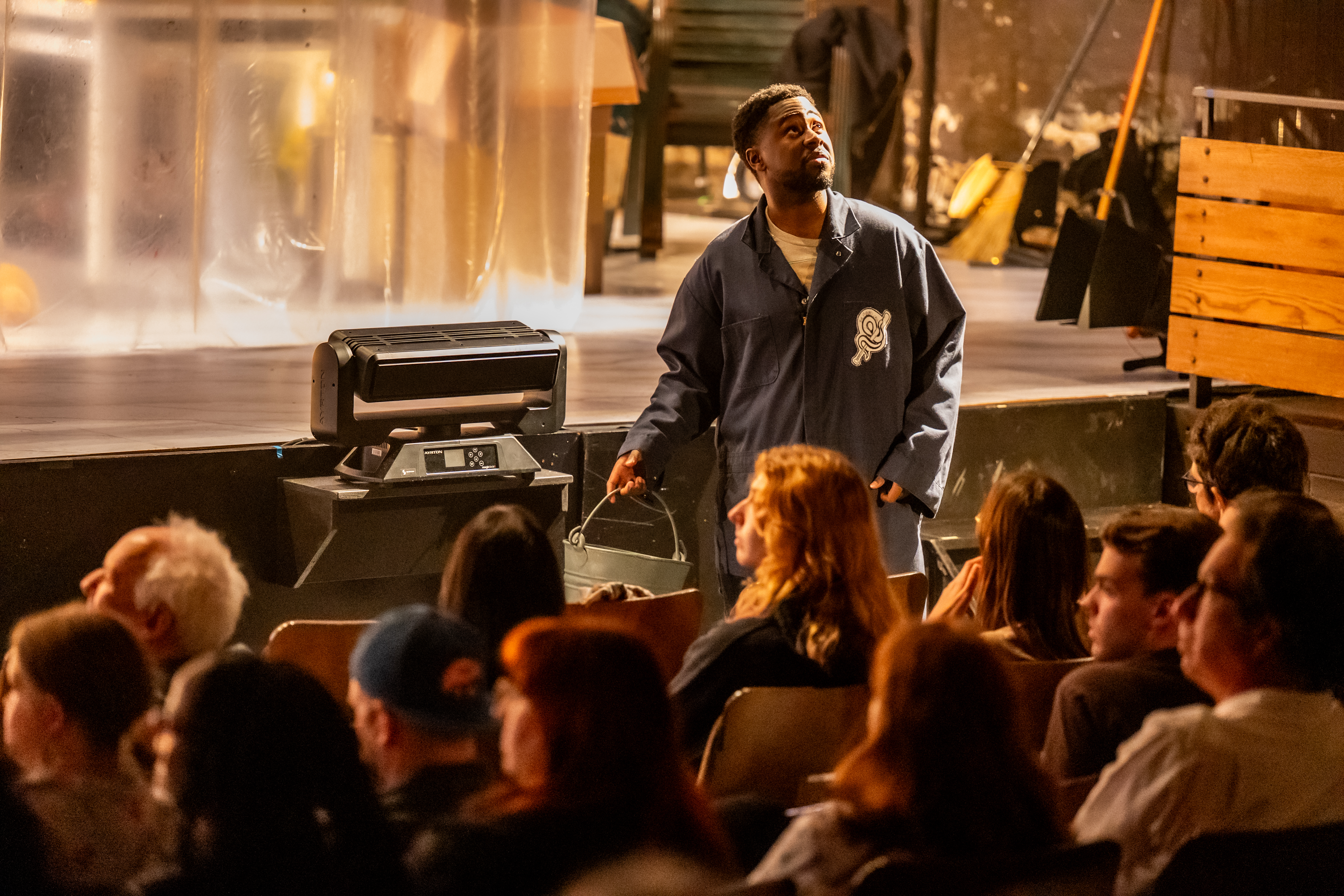
Photo by Dahlia Katz
Each version of the story
Feels like men get all the glory, in the end
Then we grow up and read about ’em
And villainize the victims in our heads
I had Peggy’s “Feminine Rage” surging through my head the whole way to the theatre before seeing Medusa. Medusa’s story opens the song, but I feel like this verse truly encapsulates the importance of how we tell the stories of our pasts. Are we not asked to praise Percy at the end of Medusa for choosing love over anger? And with Medusa on the run, are we not to see her as the villain and monster of her story still? Medusa is billed as “a fearless immersive retelling”, yet it doesn’t take its own messaging to the fullest extent it could. Medusa is certainly a technical marvel, with a script full of mythological references and brought to life with brilliant performances; it is truly an unforgettable night at the theatre.
Medusa runs in the Baillie Theatre at the Young Centre for the Performing Arts until July 12. For more information and tickets, visit: https://www.soulpepper.ca/performances/medusa
“Feminine Rage” lyrics found here: https://genius.com/Peggy-feminine-rage-lyrics
Cover Photo: A scene from Medusa at Soulpepper Theatre. Photo by Dahlia Katz.
Thank you to my Patrons:
Natalia, Steve, Brendan, Deborah, and Phil
And to my supporters who’ve bought me a coffee:
Angelica and Paul, Anonymous, Adrianna, Caitlin, Jonathan, Jada, and Courtney
Would you like to become a Patron? Check out my Patreon at: https://www.patreon.com/AViewfromtheBox
Or, you can buy me a coffee at: buymeacoffee.com/aviewfromthebox

