Nighwood Theatre is kicking off their 26/27 season with Erin Shield’s To a Flame, in collaboration with 1S1 Theatre. Dawn Jani Birley, 1S1 Theatre’s founder, has not only been instrumental in this collaboration, but is also performing in To a Flame. I got to ask Dawn about the process of working with Nightwood Theatre, her favourite moments from rehearsal so far, and what she hopes audiences take away from To a Flame.
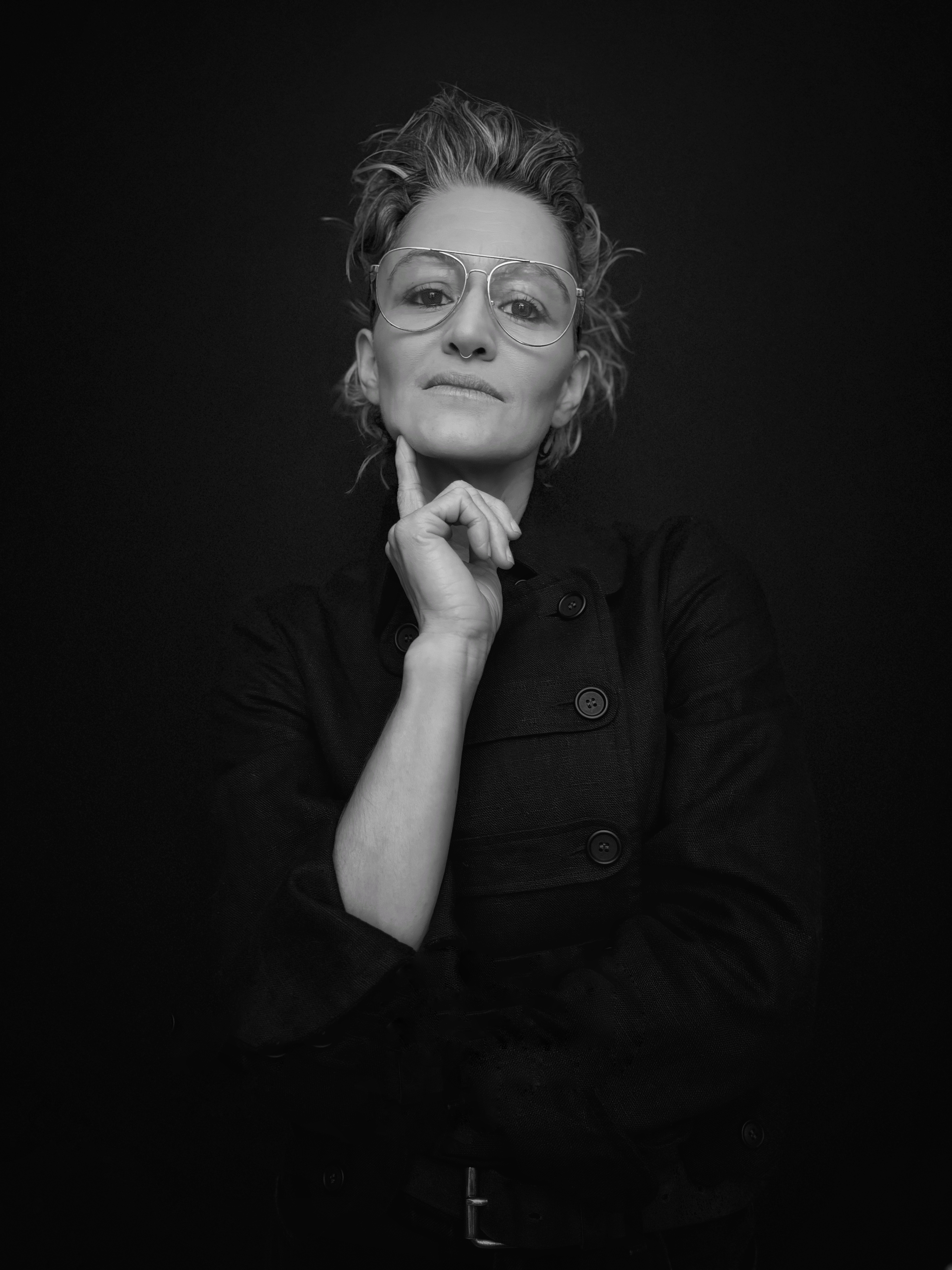
Photo by Mona Paula Kumzaite
1. Can you please (re)introduce yourself to my readers and tell us about your role with To a Flame?
I’m Dawn Jani Birley, founder and Artistic Director of 1s1 Theatre. I was born in Saskatchewan into a third-generation Deaf family, and I identify as culturally and linguistically Deaf. I hold a Master of Arts in Physical Theatre with Merit from St Mary’s University in London, UK, and was honoured with the King Charles III Coronation Medal in 2025 for my pioneering Deaf-led work in theatre and contributions to our communities.
I am an actor, movement artist, translator, and theatre consultant. In To a Flame, I play Madeline, a Deaf character whose presence brings a Deaf cultural and linguistic dimension to the story. Through Madeline, the production deepens its exploration of madness, communication, identity, and the fundamental human rights of Deaf people, while creating space for Deaf experience to exist at the centre of the narrative.
2. This is a really exciting collaboration with Nightwood Theatre and 1S1 Theatre! What was your favourite part about the initial work you did on this show?
What makes this collaboration especially meaningful to me is that To a Flame actually began long before 1s1 Theatre was founded. In 2011, we started with a workshop at Nightwood Theatre with Lisa Karen Cox, Anna Hardwick, Birgit Duarte-Schreyer, and Josette Bushell-Mingo. Our initial source of inspiration was Edgar Allan Poe’s The Fall of the House of Usher, by Stephen Berkoff, which we explored through physical improvisation. We then invited three writers into the room to respond to our improvisations and use them as inspiration to develop their own versions of the story. We ultimately chose Erin Shields’ version and continued with further workshops focused on developing the script.
During the COVID-19 pandemic, we returned to continue working with the existing script through a couple of workshops. Although the workshops stopped and after founding 1s1 Theatre, I knew I had to find a way to make it happen and bring it into full production. I advocated for another workshop last year, in which Nightwood came and agreed to a co-production.
My favourite part of the process has always been how the work emerged from our bodies before it became a script. Physical exploration was the starting point, and our lived experiences shaped what eventually became the play. It is rare to see three women with such different lived experiences and historical backgrounds come together on stage and tell our own stories on our own terms.
At the heart of the entire process has been several fundamental questions posed by Josette: what does social justice truly mean and how to support one another in the pursuit of justice? When is revenge justified? What does allyship, without taking over, looks like? That question has been part of the DNA of To a Flame from the beginning, and it continues to resonate as we bring this work to the stage today.
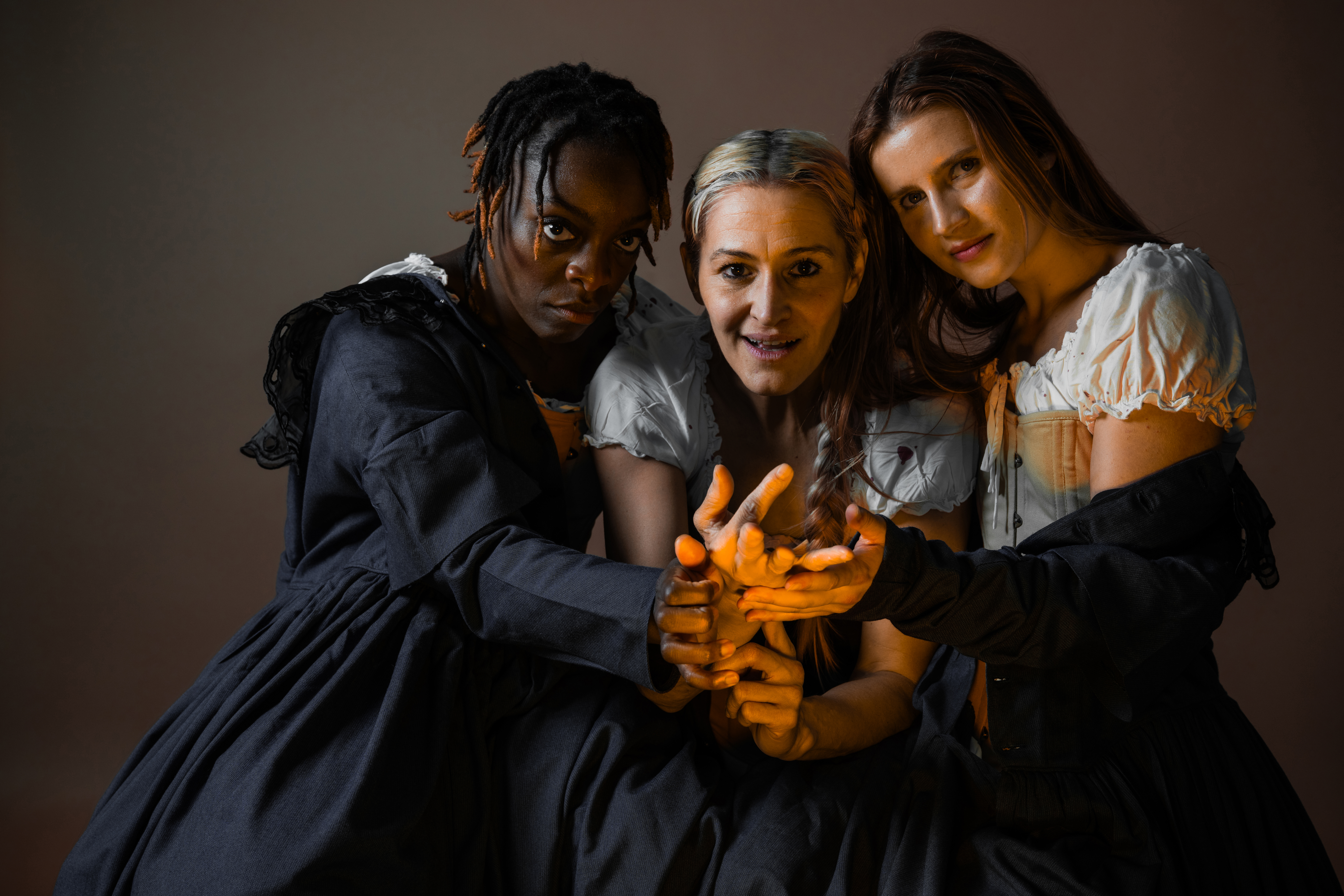
Photo by Dahlia Katz
Costume design by Jung-Hye Kim
3. Can you please tell me a bit about the unique linguistic features of To a Flame and how that fits in with both 1S1 Theatre and Nightwood Theatre’s ethos?
As a professional Deaf artist, opportunities to work in theatre are still scarce, and we don’t see sign language represented on stage nearly enough. When we do, the work is often not Deaf-led, and sign language can be treated as an accommodation or an add-on—something included for access, rather than as an essential part of the artistic language of the work.
For much of my life, I was told that Deaf people needed to conform to hearing ways of communicating, and that sign language was somehow less of a language. After working in Europe with Deaf and hearing artists, I became determined to challenge those assumptions. I explored these questions through my Master’s thesis at St Mary’s University, examining how Deaf and hearing artists could work together through a Deaf-led methodology, rather than expecting Deaf artists to adapt to a hearing model.
That thinking eventually led to the creation of 1s1 Theatre following my work with Why Not Theatre on Prince Hamlet. 1s1 was established with the goal of bringing greater balance to how stories are told and whose stories are centred. To create theatre for a hearing audience is one thing; to create theatre for a Deaf audience is another. But, for me, to bring those worlds together is where the real excitement is.
That is what makes the linguistic approach of To a Flame so exciting. ASL and English are not simply two ways of delivering the same information. They are both languages with their own structures, rhythms, visual qualities, cultural contexts, and possibilities for storytelling. We are constantly exploring how those languages can exist together theatrically and, in doing so, creating new theatrical languages.
This is where I see a connection between 1s1 Theatre and Nightwood Theatre. Nightwood’s commitment to intersectional feminism, equity, and challenging dominant structures aligns with 1s1’s commitment to multifaceted storytelling and Deaf-led creation. To a Flame gives us an opportunity to explore those questions together. Rather than asking one language or one audience to conform to the other, we are creating a space where both ASL and English—and the different experiences and ways of seeing the world they carry—can shape the work from the outset.
It is also important to acknowledge that when we talk about equity, Deaf people are too often left out of the conversation. Saying that we support equity and actually putting equity into practice are two very different things. For me, equity is not simply about giving Deaf people a platform or creating an opportunity to be seen. The more important question is: what happens after that? What is being done to actually change the systems that have historically excluded Deaf people? Are Deaf people included in the conversations where decisions are being made? Are we given meaningful autonomy to shape the work, rather than simply being invited into structures that were already designed without us? For me, true equity means moving beyond inclusion toward shared power, autonomy, and systemic change.
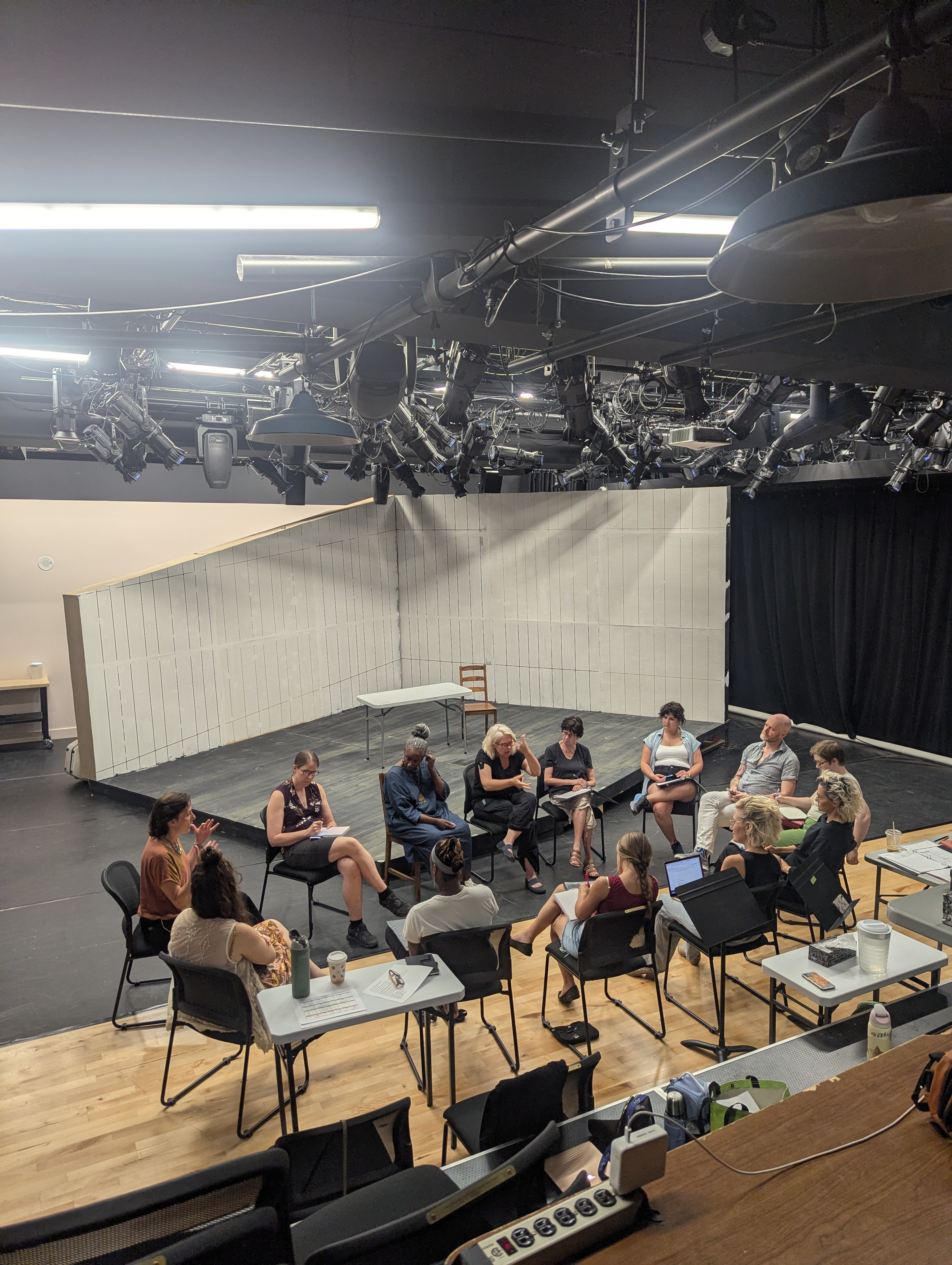
4. What has been your favourite part of the rehearsal process so far?
My favourite part of the rehearsal process is always the creative process—how we bring the script to life. I have also loved watching the room become bilingual. It is extremely rare for Deaf people to have an equitable voice and contribution—not only in theatre, but in society at large. So it is a joy to see my hearing colleagues learning my language, learning more about my Deaf history, and becoming more aware and sensitive to the cultural, linguistic, and behavioural differences between ASL and English.
Working between two languages is never easy, but that is also where the excitement lies. It pushes all of us to grow, question, listen, and learn from one another. Translation is one of my areas of specialty, so I particularly enjoy the challenge of constantly figuring out how to create an artistic equivalent between ASL and English. It is not about simply translating words; it is about finding the equivalent intention, rhythm, emotion, imagery, and theatrical impact in another language.
Making any show is challenging, regardless of signing ability, but watching To a Flame come together bilingually is especially meaningful to me. Growing up, I always wanted to see Deaf and hearing people working together on equal footing—not one adapting to the other, but both bringing their own language, culture, knowledge, and artistic strengths into the room. It is something I have always believed is possible, and this process is an opportunity to put that belief into practice.
5. What do you hope audiences take away from To a Flame?
I hope audiences leave To a Flame questioning what they think they know—about difference, about communication, and about whose voices are heard and seen, and whose are overlooked. We often associate having a voice with being heard, so people can mistakenly assume that Deaf people are silent or that we have less to say. That is not true. We do have a voice; we have simply not given the opportunity for our voices to be recognised, valued, and heard on our own terms.
We need to talk about how we choose to live with one another, how we listen to one another, and whether we are willing to challenge the systems that continue to leave people behind. Can we recognise that our differences could be a meeting point—a place where we learn from one another, make connections, and break barriers for one another?
Most importantly, To a Flame asks us to take a good look at what is happening around us and ask: What does solidarity look like, and what does it require of us? How do we stop the contemporary cycles of oppression and repression? I hope audiences leave with a greater awareness of the systems and assumptions that shape whose voices are valued in society.
To extend this conversation beyond the theatre, 1s1 Theatre is developing a companion study guide for To a Flame, offering audiences an opportunity to gain deeper insight into the work and continue exploring the questions it raises. The guide will be available free of charge online through the 1s1 Theatre website for individuals and groups—including university classes, community groups, and colleagues—who attend the production.
The guide will offer in-depth, behind-the-scenes perspectives from the women who conceived, developed, produced, and perform To a Flame. It will explore the key issues raised by the play and invite readers to engage with them at increasingly deeper levels. Each section will conclude with questions designed to encourage reflection on both the production itself and the broader social issues it raises. These questions will encourage personal reflection while also inviting critical consideration of how the themes of To a Flame resonate within—and challenge—our individual lives, relationships, and actions in society.
Our hope is that the conversation carries on after the show. We want audiences to carry these questions with them, continue the dialogue, and consider what they might do differently in their own lives and communities.
I want to thank Dawn for taking the time out of her busy schedule to answer my questions. To a Flame runs at the Nancy & Ed Jackman Performance Centre from September 22 – October 4. For more information and tickets, visit: https://www.nightwoodtheatre.net/to-a-flame/
Thank you to my Patrons:
Natalia, Steve, Brendan, Deborah, and Phil
And to my supporters who’ve bought me a coffee:
Angelica and Paul, Anonymous, Adrianna, Caitlin, Jonathan, Jada, and Courtney
Would you like to become a Patron? Check out my Patreon at: https://www.patreon.com/AViewfromtheBox
Or, you can buy me a coffee at: buymeacoffee.com/aviewfromthebox

