Once upon a time, there was a beautiful woman who couldn’t remember who she was or where she was from. Crying alongside a river, lost in a forest, she’s found by a prince who instantly falls in love with her. However, the prince could not know what troubles would await as he brings his new bride home. Claude Debussy’s Pelléas et Mélisande, directed and choreographed by Opera Atelier’s co-founders Marshall Pynkoski and Jeannette Lajeunesse Zingg, is a fairy tale come to life. Enveloped in magic and darkness alike, Pelléas et Mélisande is a story you have to experience for yourself.
Gerard Gauci has once again masterfully transformed Koerner Hall into the perfect enchanted forest for Pelléas et Mélisande to take place. With a newly constructed tower for Mélisande’s “Rapunzel” moment, and making great vertical use of the space, Gauci’s set is, as always, gasp-worthy. An element which I particularly enjoyed were the paintings which were used as the background for the surtitles. Adding to the symbolism feel of the play, while also representing elements of the story we can’t see, the screen onto which the surtitles are projected becomes a part of the overall design and not simply an accessibility feature. Resident costume designer Michael Gianfrancesco’s stunning costumes once again grace the stage and give a timeless feel to this mythical tale.
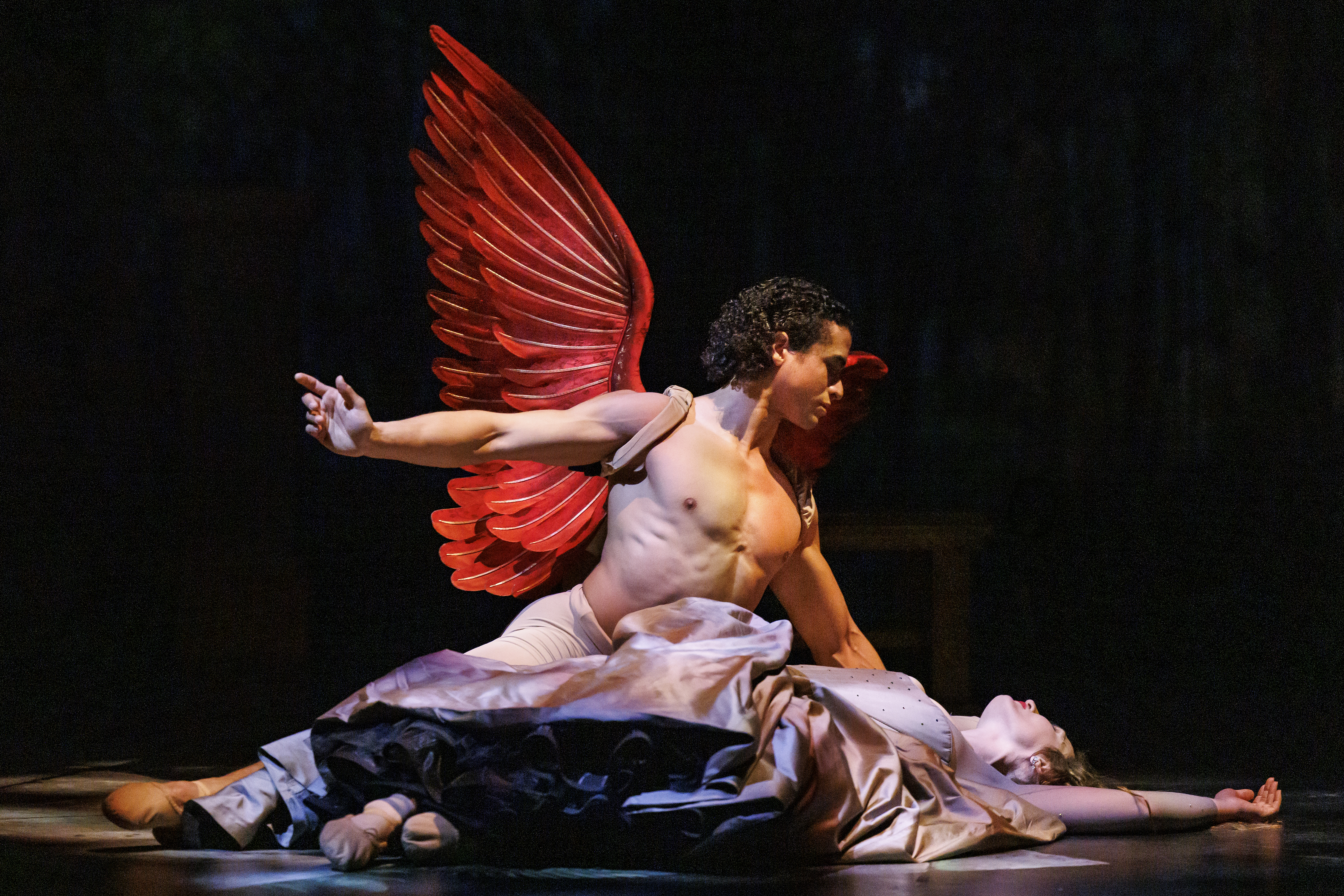
Soprano Meghan Lindsay as Mélisande and Artist of Atelier Ballet Eric Da Silva in Opera Atelier’s production of
Pelléas et Mélisande
Photo by Bruce Zinger
Golaud finds himself lost in a forest; he had been hunting, but having lost sight of the beast he suddenly realizes he doesn’t know where he is any more. He finds a young woman, Mélisande, weeping near a river deep in the woods. Like Golaud, she doesn’t know where she is, but she also doesn’t know where she’s come from either. Golaud and Mélisande marry before returning home to Golaud’s kingdom, where his mother Geneviève, his grandfather, Arkel, his young son Yniold, and his half brother, Pelléas await them. But when Golaud arrives with Mélisande, it quickly becomes clear that he’s not the only one smitten by Mélisande and her beauty. Can Mélisande bring some light to this castle shrouded in darkness and grief? Or will her siren’s song be an undoing?
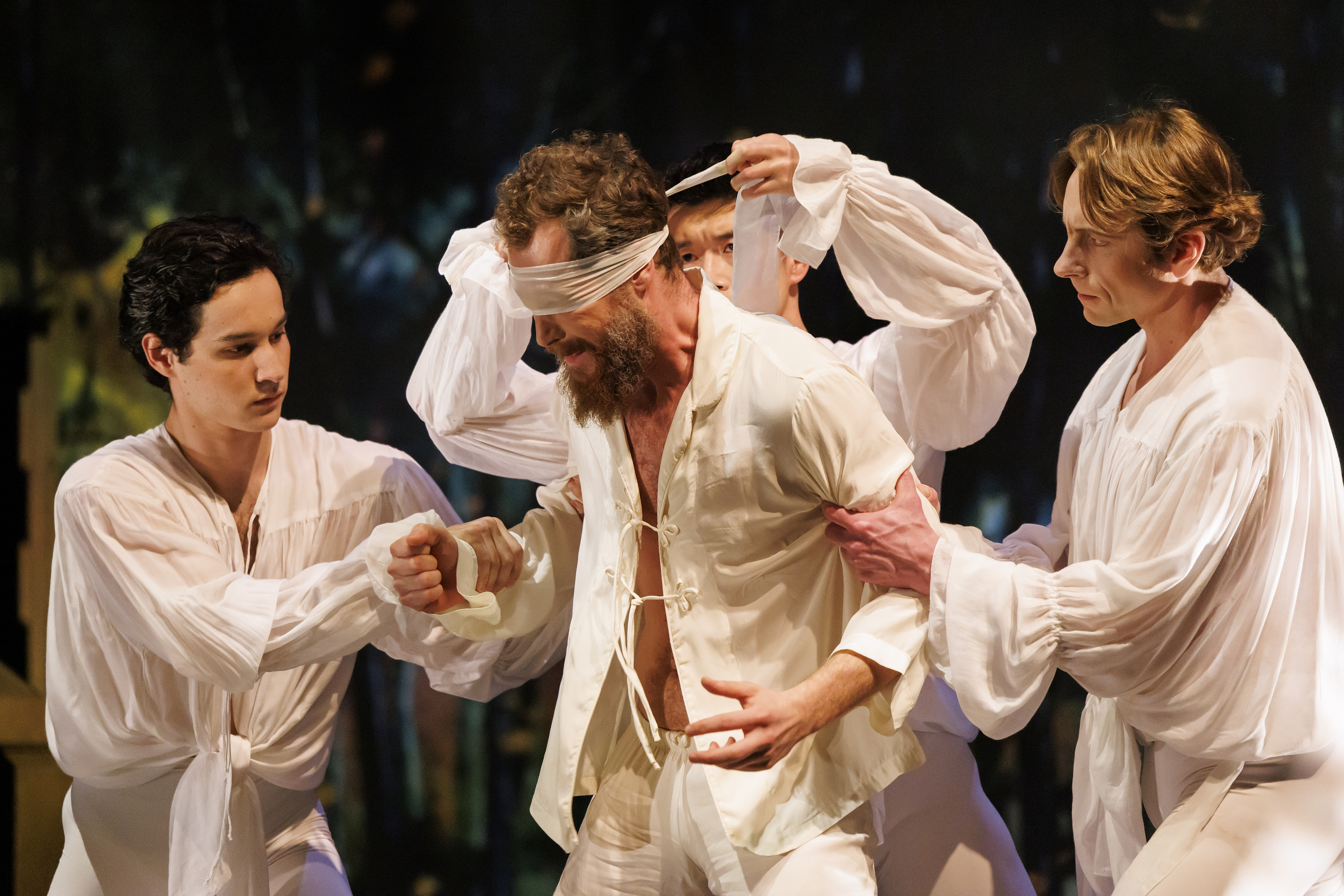
Bass-baritone Philippe Sly as Arkel with Artists of Atelier Ballet in Opera Atelier’s production of
Pelléas et Mélisande
Photo by Bruce Zinger
For Debussy’s only opera, he sure hit it out of the park. Pelléas et Mélisande has excellent pacing, an intriguing story and characters you care deeply for, all existing in this realm of magic and possibility. Like the darker origins to many of our most beloved fairy tales, Pelléas et Mélisande has a devastating end, one which inspires more questions than answers for both the characters and audience members alike. Yet there’s such beauty in the mystery that I came away purely in awe of the mastery which I’d witnessed; I think it’s my favourite Opera Atelier production to date.
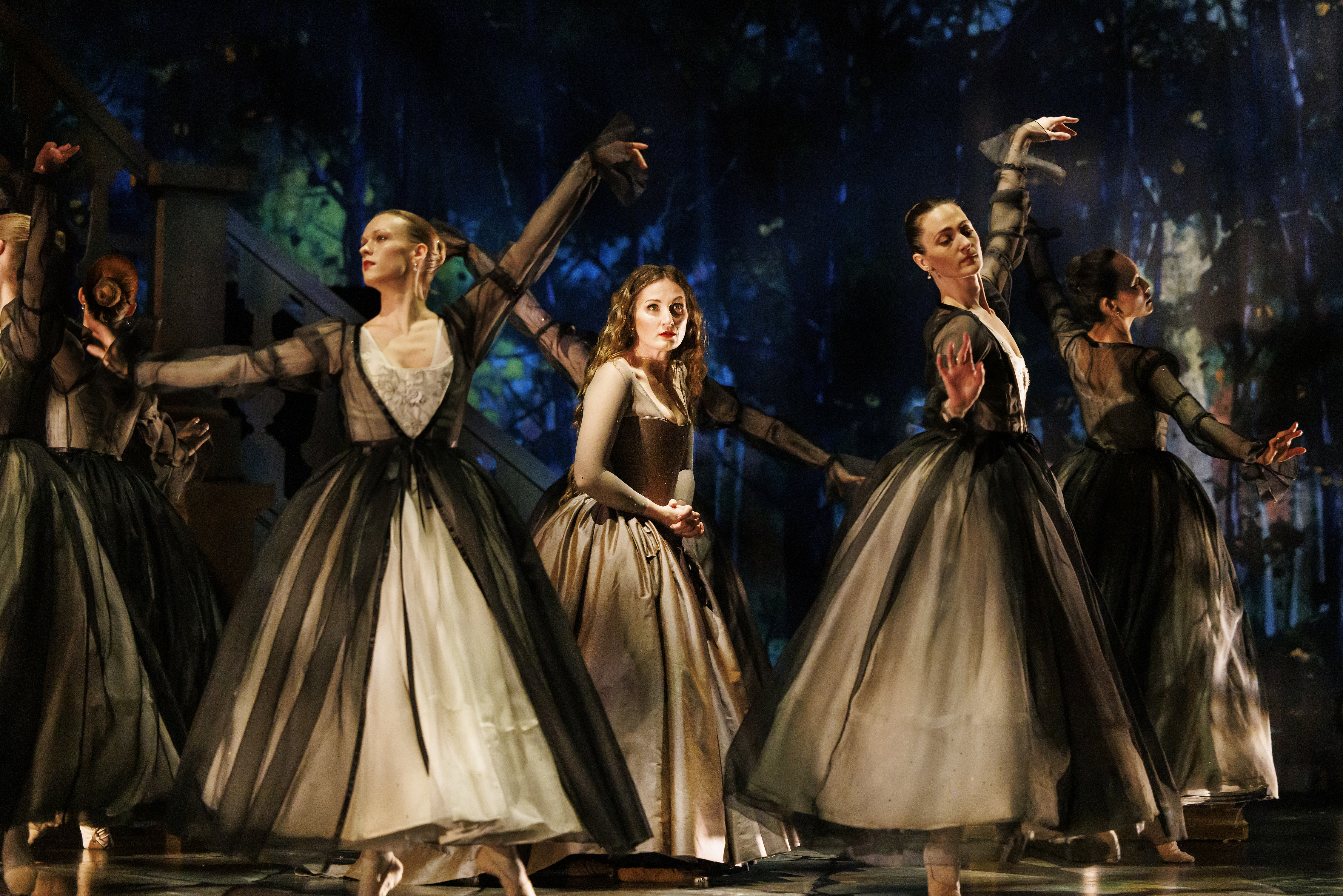
Soprano Meghan Lindsay as Mélisande with Artists of Atelier Ballet in Opera Atelier’s production of
Pelléas et Mélisande
Photo by Bruce Zinger
The artists of the Atelier Ballet have an interesting role in Pelléas et Mélisande; they remain predominantly unseen to the rest of the characters on stage. They act more like the forces of nature, or whatever unnatural forces are at work, which are guiding the characters towards their inevitable futures. Also helping indicate the passage of time, these elegant performers compliment and enhance the dream-like quality to the piece. I found myself reflecting as I watched them of the unique nature of the Baroque style of ballet which Lajeunesse Zingg and Pynkoski are so well versed in. It’s a beautiful mix of traditional ballet with elements of European courtly dances, as they weave in and out of intricate patterns and aren’t usually en pointe. The ethereal quality these talented dancers bring to Pelléas et Mélisand, along with the fabulous musicians of Tafelmusik, truly completes the experience.
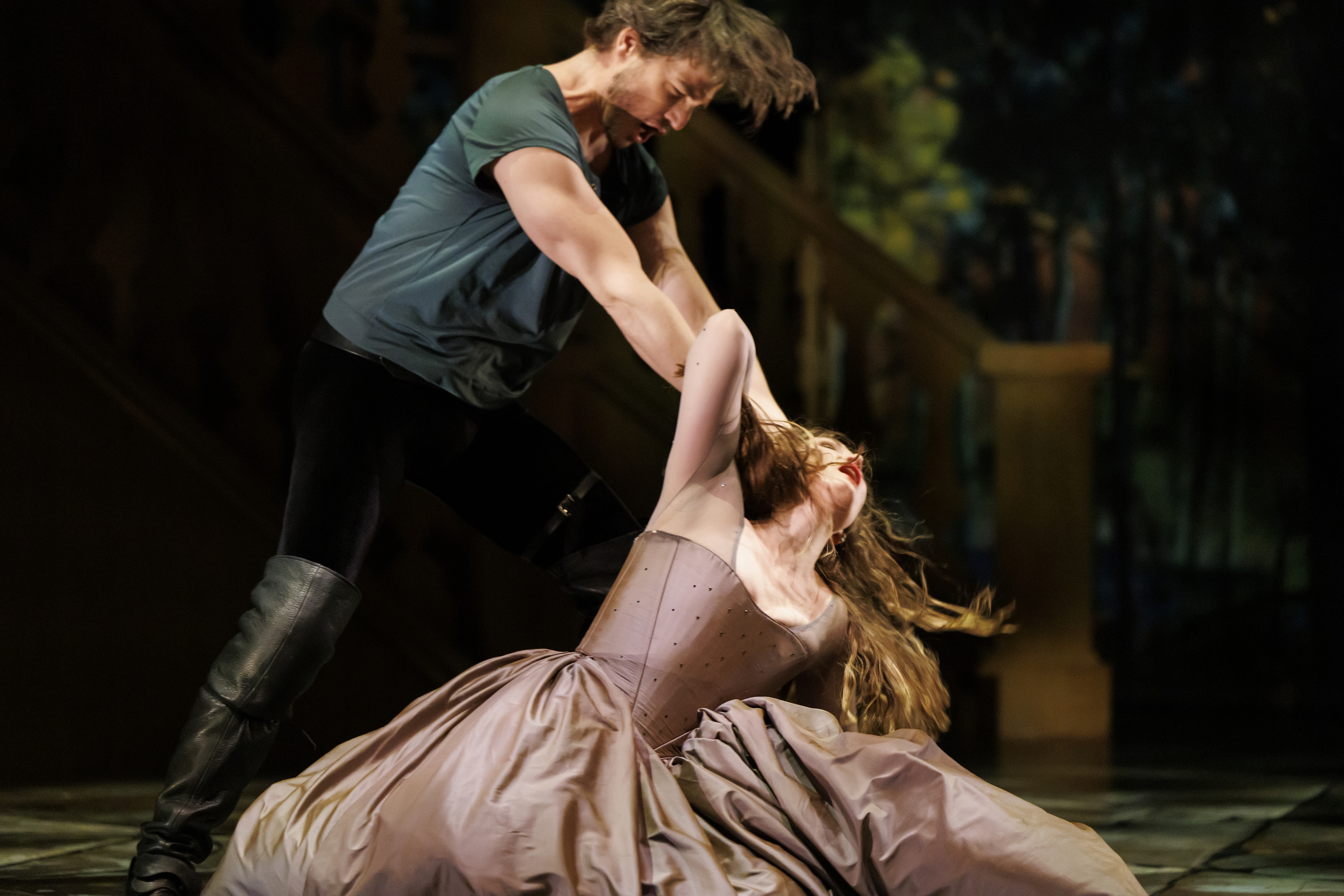
Soprano Meghan Lindsay as Mélisande and bass-baritone Douglas Williams as Golaud in Opera Atelier’s production of
Pelléas et Mélisande
Photo by Bruce Zinger
Meghan Lindsay gives a star turn as the titular Mélisande. Seductive and innocent all at once, Lindsay’s soaring vocals are perfect for the role. Douglas Williams comes back to the Opera Atelier stage as Golaud. His commanding stage presence and powerful voice make the moments where Golaud loses his temper all the more frightening. Antonin Rondepierre’s Pelléas is the exact opposite of his half brother. Cautious and careful, Rondepierre brings a gentleness to the story. Measha Brueggergosman-Lee’s Geneviève is warm and welcoming, with the vocal style to match. Philippe Sly gives a very physical yet airy performance as Arkel, acting as something of a seer within the opera. Cynthia Akemi Smithers likewise has a very active role as Yniold. She brings a youthful quality to the role which brings a lightness into the dark forest. Parker Clements’ Doctor is a foreboding yet comforting presence at the end of the piece.
I actively look forward to the spectacles which Opera Atelier produces, and Pelléas et Mélisande is no exception. Certainly a new jewel in Opera Atelier’s crown, Pelléas et Mélisande will have you dreaming about eerie forests, unruly seas, and maybe even a handsome prince to sweep you away.
Pelléas et Mélisande runs at Koerner Hall until April 19. For more information and tickets, visit: https://www.operaatelier.com/shows/pelleas-et-melisande/
Cover Photo: Soprano Meghan Lindsay as Mélisande and tenor Antonin Rondepierre in Opera Atelier’s production of Pelléas et Mélisande. Photo by Bruce Zinger.
Thank you to my Patrons:
Natalia, Steve, Brendan, Deborah, and Phil
And to my supporters who’ve bought me a coffee:
Angelica and Paul, Anonymous, Adrianna, Caitlin, Jonathan, Jada, and Courtney
Would you like to become a Patron? Check out my Patreon at: https://www.patreon.com/AViewfromtheBox
Or, you can buy me a coffee at: buymeacoffee.com/aviewfromthebox

