Beginning in the middle, starting thence away
To what may be digested in a play.
The prologue to William Shakespeare’s Troilus and Cressida immediately alerts us to the fact that we’re not starting at the beginning of the Trojan War, however what it doesn’t tell us is that we won’t be ending with the end, either. Taking his cues from prior tellings of this particular tale, Troilus and Cressida leaves you clamouring for more. Yet in this lack of resolution, do we not find truth? Is that not the way of the world to leave things dangling and unfinished? Shakespeare BASH’d’s production of one of Shakespeare’s rarely done plays, directed by James Wallis, leans into these feelings of uncertainty to create a fierce and moving spectacle you won’t soon forget.
Though adapted by many authors, the secondary love triangle in the story of the Trojan War is certainly less well-known than that of the (in)famous Helen. And while the title implies a torrid love affair to be the heart of its story Troilus and Cressida packs far more than that into its three hour run time. As per the prologue, we begin well into the Grecian siege of Troy, and tensions are starting to run high, particularly in the Greek camp – they haven’t made much progress lately and their heroic warrior Achilles lounges about in his tent. Meanwhile in Troy, the youngest prince, Troilus, has recently set his sights on the beautiful Cressida. Thanks to Cressida’s meddling and hilarious uncle Pandarus, the two begin a passionate but exceptionally short-lived love affair, as the night of their hand-fasting, Cressida is traded to the Greek Diomedes in exchange for the release of another Trojan soldier. Troilus, being unsure of the faithfulness of his new-found love, spies on her in Doimedes’ tent, only to find the two in loving embraces. Spurred on by his anger, Troilus fights hard against the Greeks on the battlefield the next day, though instead of winning back his love, he loses his brother.
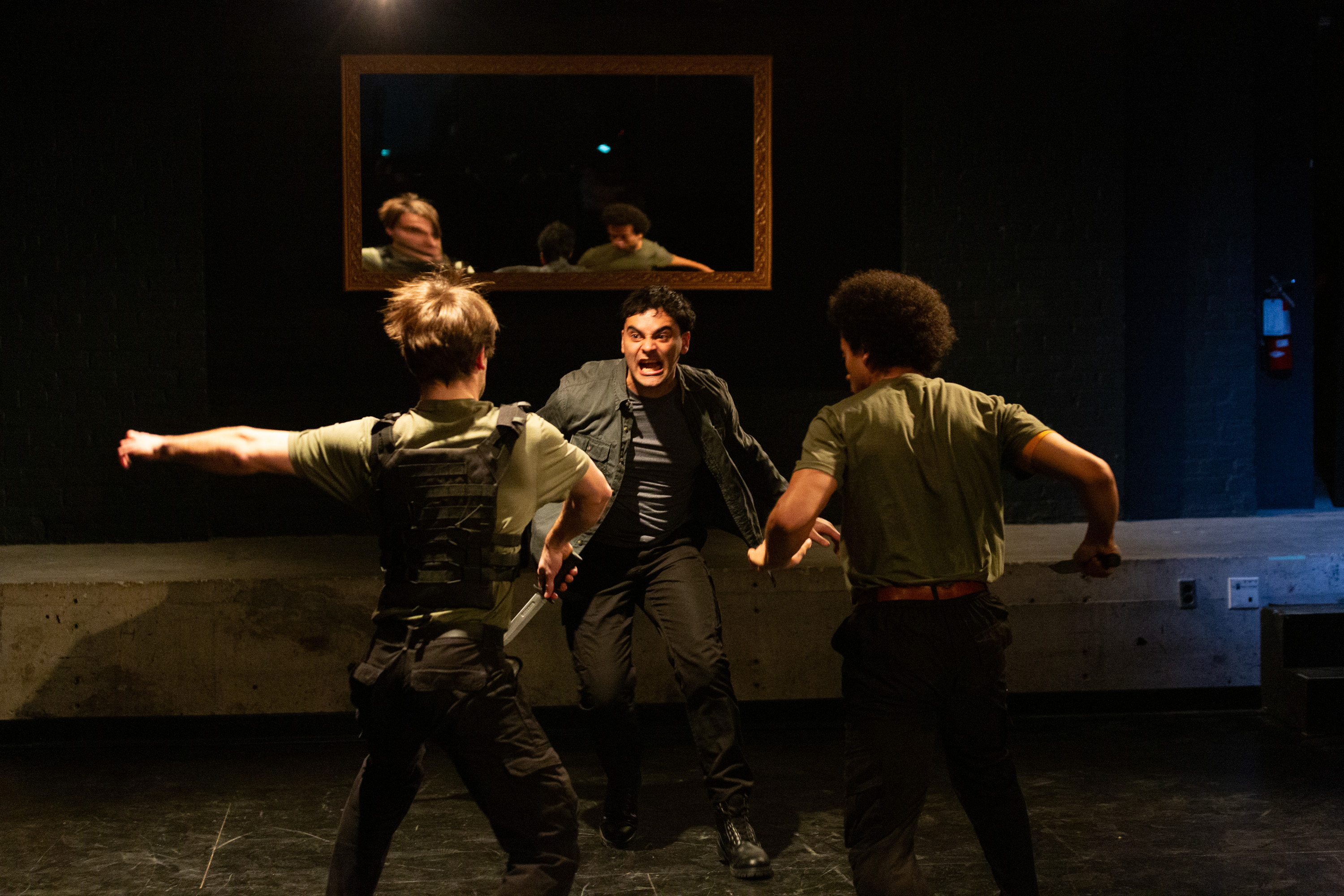
Photo by Matt Nish-Lapidus
Troilus and Cressida really is about the mess in the middle, about starting things without any kind of satisfactory ending. The first half of the play focuses on a challenge which the Trojan hero Hector issues to the Greeks, to see if he can find a worthy opponent. Yet when one of his kinsmen, Ajax, comes forward as the Greek champion, the fight lasts a few blows and then stops, with Hector merely seeming proud of his half brother and the soldier he’s become. Likewise, Troilus never gets full vengeance on Diomedes, nor is Troilus slain by him, and that somehow feels very strange. The title sets us up for a Romeo and Juliet or Antony and Cleopatra style story, and yet spends more time talking war strategies than it does with the lovers. The open-ended nature of this play is true to Shakespeare’s sources, and those which would have been known to his audience, and yet it left me feeling like there was a second part that I needed to see to get the tragic or triumphant conclusion.
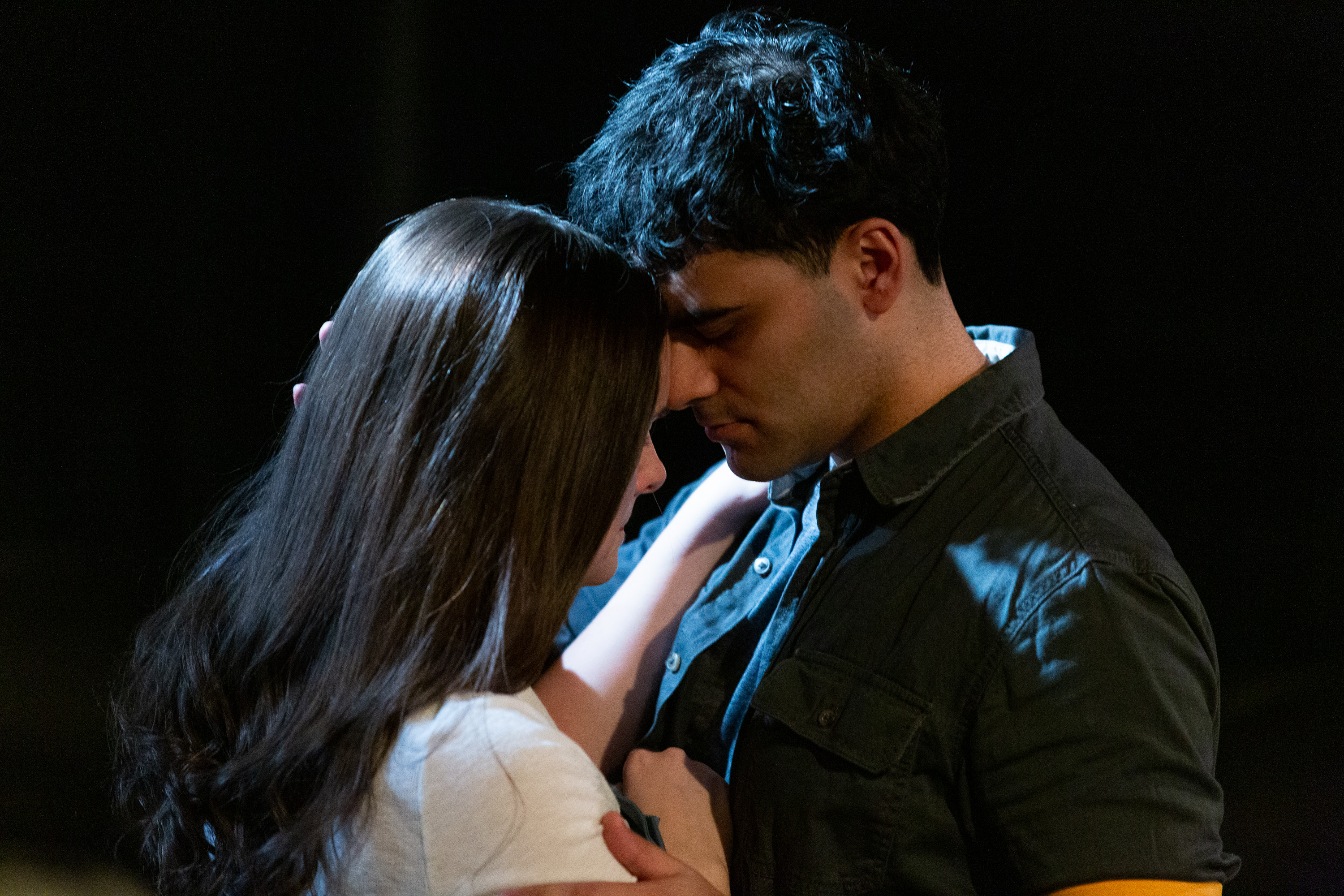
Photo by Matt Nish-Lapidus
However, the play also does a marvellous job at holding a mirror up to the real world. The only set piece for this production is a large mirror which hangs at the end of the space, which is occasionally used for the characters to check their appearance. Yet it’s a reminder that this is how the world is; it’s messy, wars are ignited and re-ignited seemingly with no beginning or end, and there often isn’t a little bow wrapped around everyone’s stories. To me, this proves the endurance of Shakespeare and his stories, as there’s a human element to them which speaks to us centuries later – so much, and yet so little, has actually changed.
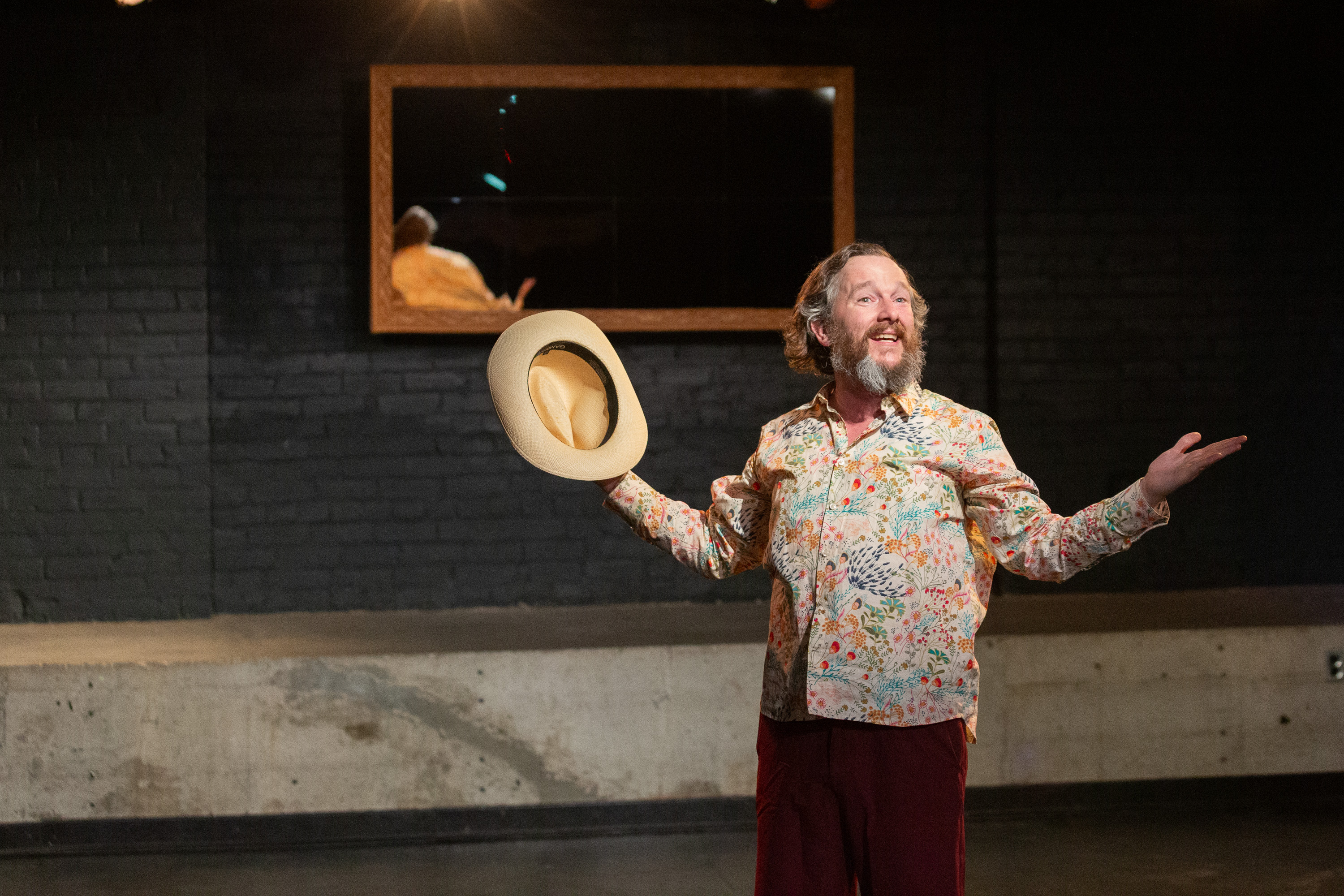
Photo by Matt Nish-Lapidus
Deivan Steele and Breanne Tice play the title Troilus and Cressida, and their chemistry is off the charts. Steele gives a passionate performance as Troilus, even eliciting tears from the audience. While Tice uses all of her charm as Cressida, though she shows a vulnerable side her as well. Jennifer Dzialoszynski plays a powerful Ulysses, and the act of revealing that Ulysses is a woman adds nuance to the dynamics between her and the soldiers. Adriano Reis and Andrew Iles are fearsome Greek warriors as Ajax and Achilles, with their booming cries filling the theatre. Jordin Hall’s Hector is equal parts ferocious and sweet, with Hall able to deftly change between the two. Kate Martin plays three women, each totally unique as Helen, Cassandra, and Alexandra, however I think Cassandra was my favourite, as Martin was able to make her so immediately recognizable and the moments of her visions were beautifully performed. Two stand-out performances are given by Geoffrey Armour and Julia Nish-Lapidus as Pandarus and Thersites, who are the comedic relief this show needs. Both of them have such a mastery of the language and can spew their bawdy jokes and insults as if they were made up on the spot. I also loved that Nish-Lapidus’ character was fashioned to be a war journalist, documenting what was happening; it was an interesting take on the voyeurism usually afforded to the fools in Shakespeare’s stories. Isaiah Kolundzic’s Agamemnon commands the stage whenever he enters. David Mackett’s Nestor and Priam demand the respect they’re given by the other characters, while Felix Beauchamp’s Patroclus certainly lacks any of that respect as Achilles’ “varlet.” Austin Eckert gives a slight sinister edge to Diomedes which sets him up as a perfect foil to Troilus. Ben Yoganathan’s Menelaus and Paris are foils for one another, and Yoganathan plays this perfectly. Rianna Persaud’s Aeneas walked into every scene like they were the descendants of the founders of Rome.
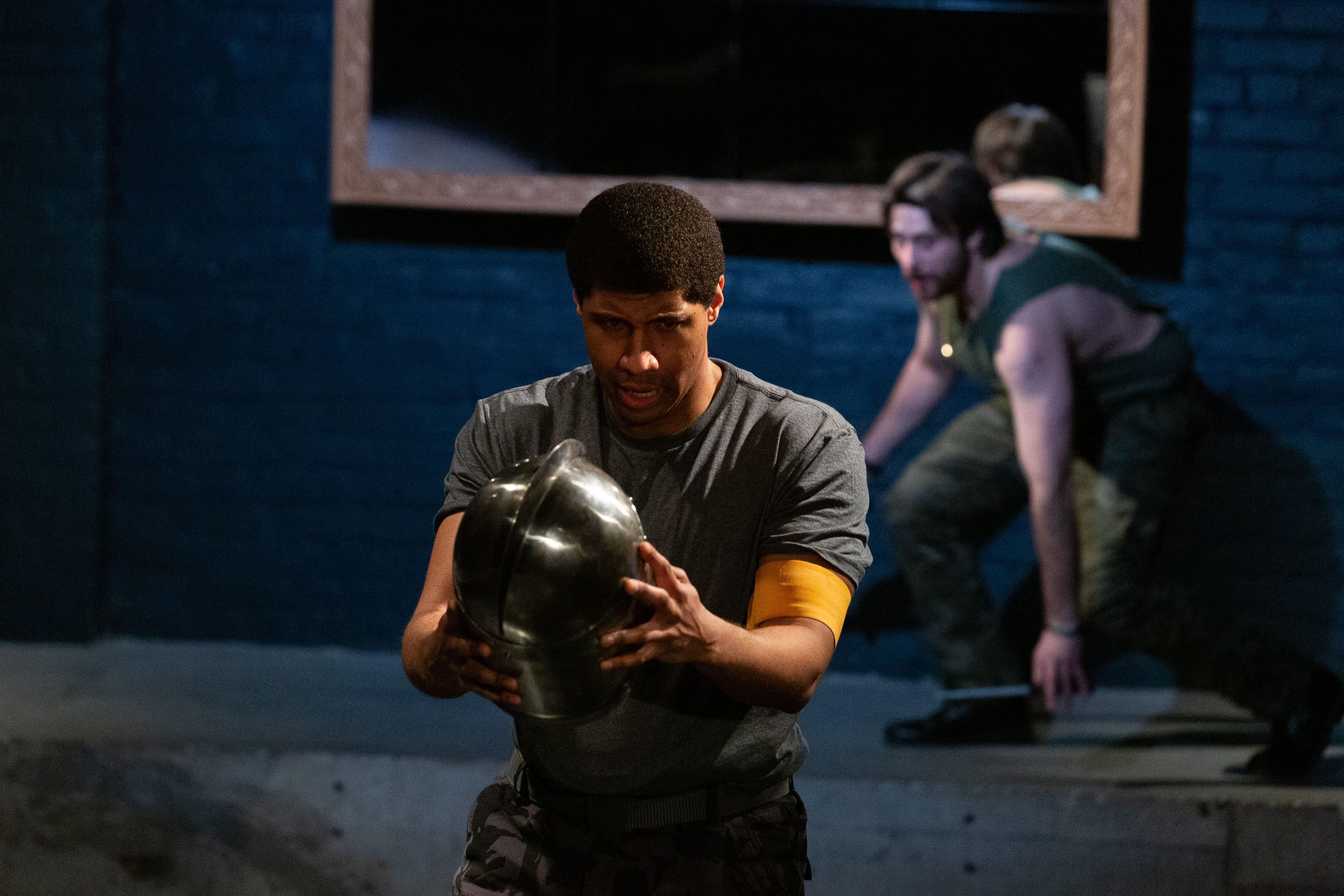
Photo by Matt Nish-Lapidus
There’s so much we could talk about with Troilus and Cressida: from gender politics to art of war, Shakespeare’s use of comedy to the potential of this play as satire – as we often find with the Bard’s works, there’s so much of humanity existing in one story. And though the love story feels like the afterthought rather than the central narrative, this production makes the sweet moments between the two feel like calm within the storm. Shakespeare BASH’d has helped me check another one of Shakespeare’s plays off of my to-see list, while also reminding me why I love these plays so dearly.
I want to give major kudos to this cast; Company is being performed in the upper theatre at the same time as Troilus and Cressida, meaning that there can be a great deal of noise during the performance. This didn’t stop any of these performers from giving it their all, in fact, Deivan Steele had to give one of his most heart-rending speeches with a cacophony of noise coming from above and he didn’t even flinch. Their professionalism and steadfastness is commendable, and I wanted to ensure that it was noted.
Troilus and Cressida runs at the BMO Incubator until February 8. For more information and tickets, visit: https://www.shakespearebashd.com/troilus-and-cressida.html
Quotes from Troilus and Cressida: https://www.folger.edu/explore/shakespeares-works/troilus-and-cressida/read/
Cover Photo: Troilus and Cressida – BASH’d – Breanne Tice, Geoffrey Armour, Deivan Steele – Photo by Matt Nish-Lapidus
Thank you to my Patrons:
Natalia, Steve, Brendan, Deborah, Eleanor
And to my supporters who’ve bought me a coffee:
Angelica and Paul, Anonymous, Adrianna, Caitlin, Jonathan, Jada, and Courtney
Would you like to become a Patron? Check out my Patreon at: https://www.patreon.com/AViewfromtheBox
Or, you can buy me a coffee at: buymeacoffee.com/aviewfromthebox
 A View from the Box