I grew up in South-Western Ontario, meaning I am no stranger to the behemoth that is Chemical Valley. Located in Sarnia, Ontario Chemical Valley is a large concentration of chemical plants comprising approximately forty percent of our nation’s chemical industry. However, right at the foot of these massive fire and pollution spewing plants is the Aamjiwnaang reservation, causing disproportionate levels of health issues amongst the Indigenous people who live there. This is the subject of Kevin Matthew Wong’s The Chemical Valley Project, a multi-media theatrical experience about the people fighting for the Aamjiwnaang people and our climate. I got to ask Kevin about his inspiration, his passion for climate activism, and the message which lies at the heart of The Chemical Valley Project.
1. Could you please introduce yourself to my readers and talk a bit about your role with The Chemical Valley Project?
Hi everyone, my name is Kevin Matthew Wong, I’m a Hakka Canadian theatre creator, producer and performer. Generally I create and support work that engages with climate activism or social justice. I’m the co-creator of The Chemical Valley Project, a documentary theatre work created with Julia Howman and dramaturgs, advisors and activists Vanessa Gray and Beze Gray. Eight years ago I convened this group of wonderful artists to consider whether theatre could be a vehicle to support Vanessa and Beze’s work as land defenders and water protectors. Since then we’ve been on a journey to engage and energize audiences to think more deeply about environmental racism, Indigenous relations, and the foundations of what it means to be Canadian today.
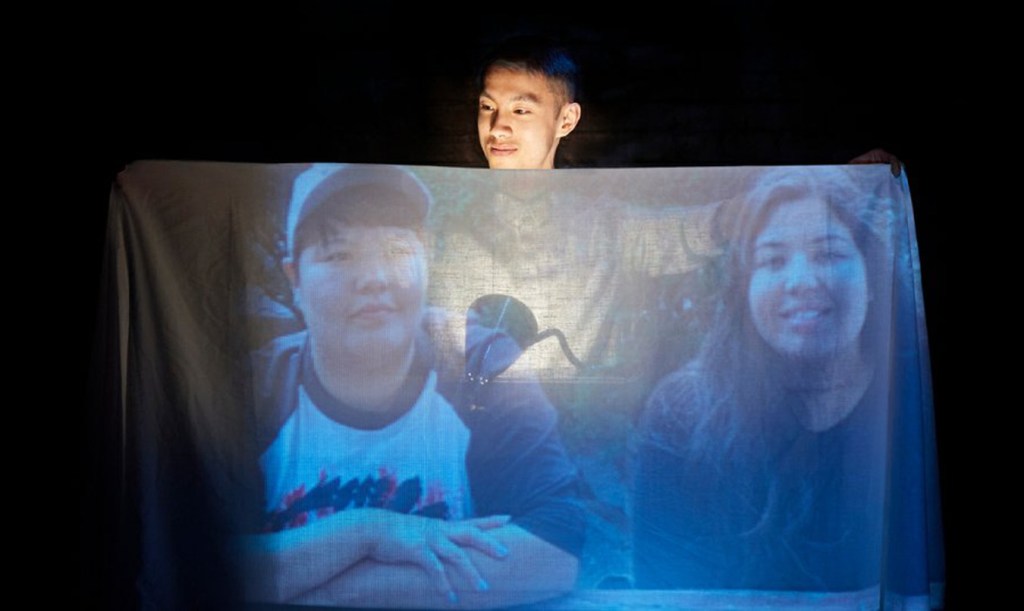
Photo by Dahlia Katz
2. What was it which initially drew you to the real story behind The Chemical Valley Project?
The story of the Chemical Valley and its relationship with the Anishinaabe community of Aamjiwnaang drew me in because it was like a microcosm of how Canada often treats Indigenous people and nations. Vanessa and Beze had begun leading events called “Toxic Tours” to invite people from outside of Aamjiwnaang to learn more about the Chemical Valley. By chance a friend invited me to go with them on the tour in 2016 and, as I listened to Vanessa and Beze speak for the first time, I knew I wanted to find a way to support and amplify their work.
3. I read that a great deal of your theatrical work involves stories about climate change. What inspired you to combine your art and political activism?
In high school I was constantly running between the environmental club and the drama club – I had these two passions that I didn’t know how to connect together. In university I was lucky to meet classmates who, like me, wanted to contribute their skills as storytellers to tell stories about climate change and the environment. Early on, I knew that I wanted to create work that acknowledged the audience’s intelligence. I presumed that our audiences already had a consciousness around climate issues and were aware of their own relationship with climate anxiety and activism, afterall my generation had grown up conscious of climate change and its devastating impacts since our tweens. I also realized after my first few attempts at creating climate-based theatre works that we had to innovate to succeed artistically. The climate emergency is a unique challenge for humanity, so I was convinced that making effective art about it would also require unique strategies, aesthetics, and viewpoints. And no one company, show, or person can do it all. We use the analogy of many hummingbirds all working together in the show, and that critical spirit of collaboration links theatre making and climate activism. It is a great privilege of mine as a climate-focused theatre creator to maintain relationships with powerful activists like Vanessa and Beze Gray who are on the front lines of defending their communities in battles against destructive industries. Being in relationship with others keeps me going despite the heaviness of the topics we engage with. The sense of hope that comes from working together is something I try to get across in the show.

Photo by Dahlia Katz
4. The Chemical Valley Project is a multi-media theatrical event; how do you balance the different forms of media to tell your story?
We always try to find the right balance between audio, video, solo performance and object puppetry in the show. We’ve made 20 different iterations over the past 8 years and we didn’t always get it right, but with all of that trial and error I believe the Montreal version really strikes a good balance. We want to first acknowledge our audiences’ intellectual curiosity with the facts around the topic – we share research, facts, figures, maps and statistics. But gradually we move the audience over to the more emotional engagement with the characters and ideas in the piece. We try to use technology to humanize the stories shared in the show and, eventually, once we think the audience’s heart has been fully opened, we even have a scene where there’s almost no technology at all – just a voice, a simple light, and a story.
5. What is the message or feeling you hope audiences take away from The Chemical Valley Project?
I hope that audiences who are already engaged with the climate movement feel energized, motivated and seen. For those who are figuring out how to engage, I hope the show gives them some examples of people who are leading the way. And for all audiences, I hope they leave with a more open heart and a curiosity to think about their own relationships with this land, and a spark to move this country forward in a good way.
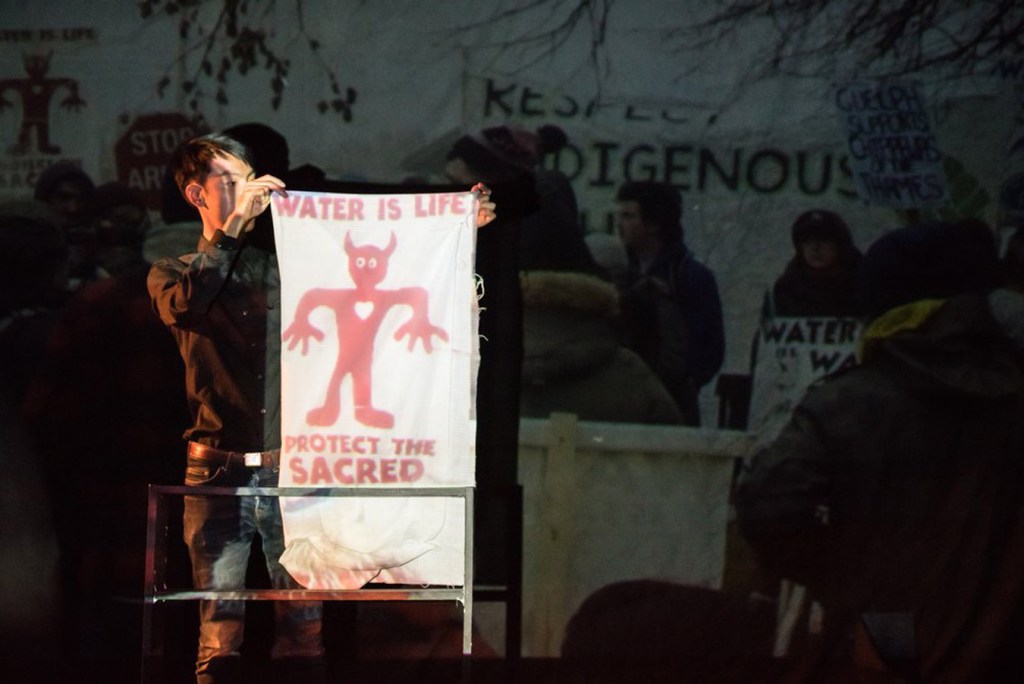
Photo by Dahlia Katz
I want to thank Kevin for taking time out of his busy performance schedule to answer my questions. The Chemical Valley Project is on in Montreal until March 24th. I hope it’ll have another run here in Toronto soon! For more information and tickets, visit: http://www.broadleaftheatre.com/chemical-valley-project
Thank you to my Patrons:
B. Kinnon, D. Moyes
And to my supporters who’ve bought me a coffee:
Angelica and Paul, Anonymous
Would you like to become a Patron? Check out my Patreon at: https://www.patreon.com/AViewfromtheBox
Or, you can buy me a coffee at: buymeacoffee.com/aviewfromthebox
 A View from the Box